Tools and Strategies for Sustaining Peace
General Information
This intensive five-day course (40 hours) provides specialized training in tools and strategies for peacekeeping, aimed at individuals interested in governance, and peacebuilding in complex contexts.
The course focuses on the analysis of the political, institutional, and socioeconomic dimensions of peace operations, addressing the political process, strengthening the rule of law, delivery of essential public services, support for core state functions, the role of international observers, economic revitalization, and livelihoods recovery.
In a global context marked by increasingly complex and protracted conflicts, peacekeeping requires a comprehensive approach that goes beyond ceasefires and incorporates coordinated responses before, during, and after conflict.
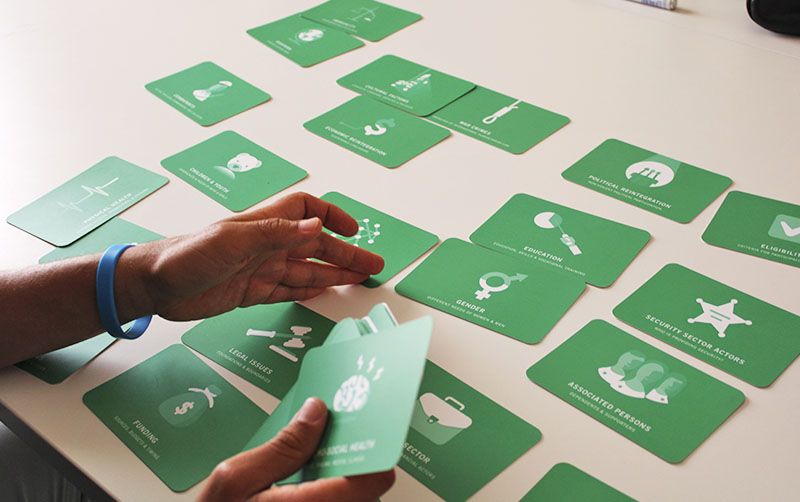
Throughout the course, participants will explore key activities related to political and institutional security processes, such as elections, inclusive dialogue, reconciliation, conflict management at national and subnational levels, mine action, Disarmament, Demobilization, and Reintegration (DDR), and Security Sector Reform (SSR).
The course also examines the role of international and regional organizations such as the United Nations, NATO, OSCE, and the African Union, as well as the main UN peacekeeping policies and strategic frameworks, including Our Common Agenda and Action for Peacekeeping (A4P).
Course Contents
The module focuses on the main operational and strategic tools for peacekeeping, with particular attention to:
- Security Sector Reform (SSR)
- Disarmament, Demobilization, and Reintegration (DDR)
- Governance and institutional strengthening
- Electoral processes in post-conflict contexts
- The role of international and regional organizations such as the UN, NATO, OSCE, and AU
The module also incorporates an analysis of the triple nexus approach (humanitarian–development–peace), recognizing that conflicts do not follow linear processes and require coordinated and sustained responses from all relevant actors in order to generate lasting impacts in affected communities.
Methodology
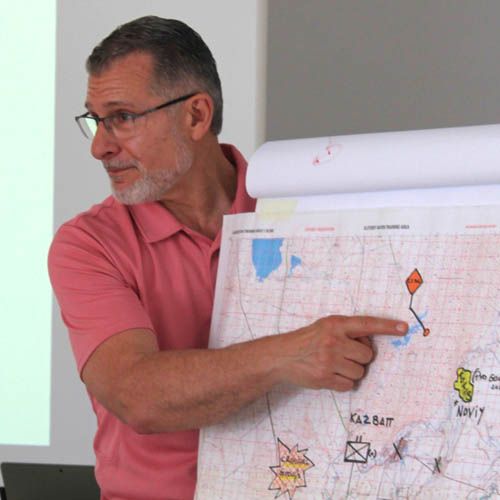
The methodology combines expert lectures, structured debates, collaborative group work, case study analysis, role-playing exercises, and simulations, promoting hands-on, participatory learning applied to real-world contexts.
This approach enables participants to develop both solid theoretical knowledge and essential practical skills for work in humanitarian contexts, peacebuilding, governance, and post-conflict processes.
Format
- Intensive training: 1 week
- Modality: On-site
- Language: English
- Certification: Official Diploma from the International University Center for Peace Missions (IUCPM)
The course is delivered in small groups, allowing for personalized attention and encouraging the active participation of each attendee.
The programme features an international faculty with extensive experience in field missions, NGOs, and international organizations, and brings together a diverse cohort of participants from different nationalities and sectors, promoting experience exchange and the development of global professional networks.
Target Audience
This course is designed for professionals and individuals in training who wish to specialize in peace, security, and governance processes in post-conflict contexts. It is particularly relevant for:
- Professionals from international organizations, NGOs, regional agencies, and public administrations working in security, governance, DDR, and electoral processes.
- Armed Forces personnel and security personnel involved in peacekeeping missions or security sector reform.
- Professionals from international organizations, NGOs, and humanitarian agencies working on Women, Peace and Security (WPS) or Youth, Peace and Security (YPS) programmes.
- Lecturers and researchers in Peace and Conflict Studies.
- Students of international relations, Political Science, or Law who wish to specialize in peace operations coordination.
- Individuals seeking to develop strategic competencies to lead peace, security, and governance initiatives in post-conflict contexts.
Upcoming Edition
The next edition will take place from June 7th to June 11th, 2027.
REACT
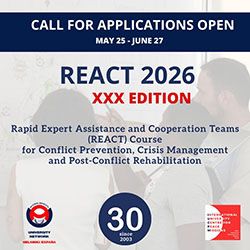
The course Peacekeeping Strategies is one of the five modules that make up REACT, Helsinki España’s comprehensive programme designed to train professionals in rapid response, international cooperation, and peacebuilding.
The other modules of the programme cover:
- Conflict Analysis and Transformation
- Protection of Civilians and the International Legal Framework
- Threats to International Peace
- Hostile Environment Awareness Training (HEAT)
The modules are generally delivered once a year. Each module can be taken independently in different editions, depending on the participant’s availability. Upon completion of all modules, participants obtain the official OSCE “REACT” certification, which validates comprehensive training as an Expert Team for Rapid Assistance and Cooperation. In addition, those who enroll in more than one module may benefit from a discount.
Information document
General Information ↓
Registration and Further Information:
To register or to resolve any questions, please send us an email to iucpm@helsinkiespana.org including:
- The completed registration form
- Your CV
- A passport-size photo.
If you would like more information, you can write to us at the same email address or send us your inquiry directly through this form:
Upcoming event
Testimonials