The 2030 agenda and sustainable tourism in the Camino de Santiago
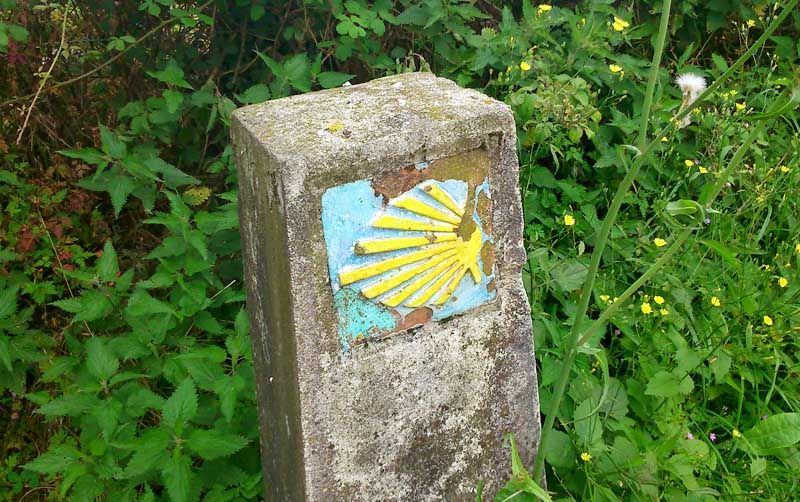
Camino de Santiago
The Camino de Santiago is a historic and cultural pilgrimage route that crosses Spain, originating from various points across Europe, with its final destination in Santiago de Compostela. This route holds not only spiritual and religious significance but also serves as a unifying axis of European cultural heritage, both tangible (architecture, natural landscapes) and intangible (traditions, crafts, gastronomy). It also promotes the development of rural communities along its path and fosters international and intergenerational cultural exchange.
Project Information
The project “Tourism, the SDGs, and Human Rights: Innovation and Future Work on the Camino de Santiago”, developed by Helsinki España – Human Dimension, is an international university innovation program. Its purpose is to promote among university students a deep understanding of Human Rights, the Sustainable Development Goals (SDGs), and sustainable tourism, combining theoretical learning with practical experiences along the Camino de Santiago.
Participants include 45 university students, 15 university professors (or representatives of university rectors) from Europe and the Americas, and representatives of Helsinki España.
Objectives
- Highlight the cultural, natural, and human richness of the Camino de Santiago, combining online training with hands-on experience along the last 100 km of the route, where students explore historic buildings, local gastronomy, traditions, and legends.
- Encourage dialogue and reflection on European values and Human Rights through debates and thematic spaces, including connectivity between international universities.
- Promote Jacobean cultural heritage along the Camino and in Santiago de Compostela.
- Support the development of rural areas along the Camino, especially municipalities with fewer than 3,000 inhabitants.
- Raise awareness of the Camino’s heritage among young people.
- Promote Galicia as a cultural and tourist destination.
Project Phases
-
Phase A – Online Training (July – September):
Online study and reflection on Human Rights, SDGs, sustainable tourism, and global citizenship. Students complete three thematic modules combining theory and practical application within the framework of the Camino de Santiago. -
Phase B – On-Site Camino Experience (October):
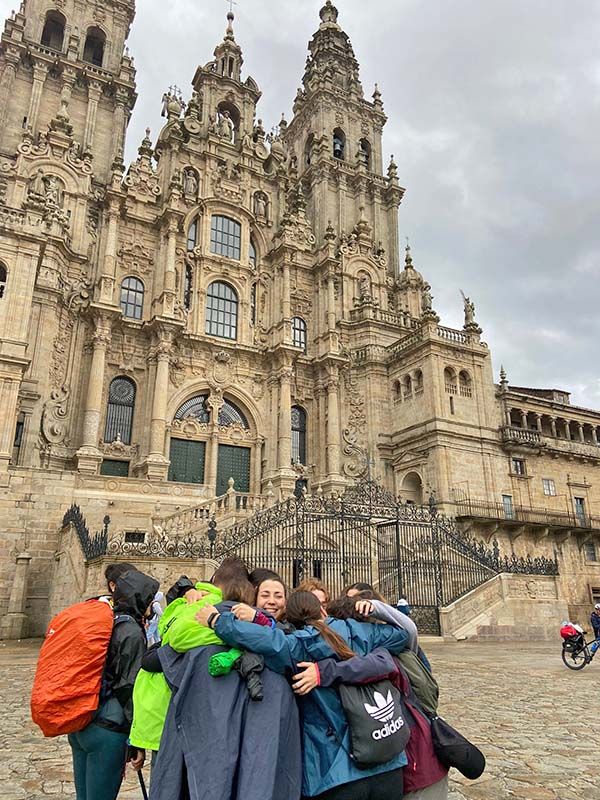
A 100 km walking route along the Camino de Santiago, divided into three groups along different paths (Portuguese Way, French Way, and Northern Way). Focus on cultural exchange, understanding, tolerance, and solidarity among students. -
Phase C – Final Meeting (October):
Presentation of online work conclusions and sharing of the best ideas for tourism product development in Santiago de Compostela.
Editions
The project has been carried out continuously from 2018 to 2022, consolidating international participation and fostering enriching cultural exchange, university commitment, and student awareness of the SDGs and Human Rights through the practical experience of the Camino de Santiago.
Upcoming event