

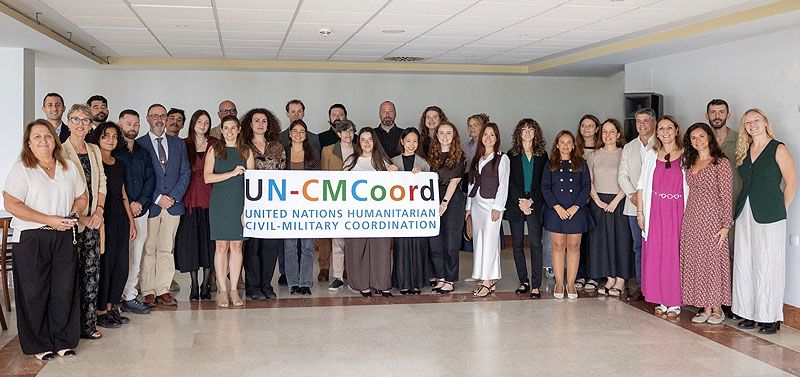
Today, the United Nations Humanitarian Civil-Military Coordination Training Course (UN-CMCoord) was officially inaugurated in Alfaz del Pi, marking the fifth consecutive year that Helsinki España, in collaboration with OCHA (United Nations Office for the Coordination of Humanitarian Affairs), has organized this training course in the municipality. The course is funded by the Spanish Ministry of Defence and the Generalitat Valenciana, with the support of the Alfaz del Pi City Council.
Led by OCHA, the course aims to train humanitarian professionals in coordination between civilian and military actors in emergency and conflict situations. Civil-military coordination is essential to ensure that humanitarian assistance reaches affected populations in a safe, effective, and coordinated manner.
This edition brings together 22 participants from 13 countries, representing different regions of the world, including North America, South America, Europe, Oceania, and the Middle East. A key feature of this edition is the diversity of professional backgrounds represented, bringing together military personnel and humanitarian professionals to strengthen mutual understanding and coordination between both sectors. The military component includes members of the Spanish Armed Forces and the Australian Defence Force, while the humanitarian sector includes professionals from United Nations agencies such as UNFPA and UNHCR, as well as international NGOs such as Médecins du Monde and INSO. This combination of civilian and military perspectives creates a valuable environment for participants to exchange experiences and develop a deeper understanding of the roles, responsibilities, and coordination mechanisms required in complex humanitarian contexts.
Civil-military coordination plays a particularly important role in complex emergencies and conflict situations. Effective coordination can help ensure that humanitarian actors are able to operate safely and independently, while facilitating communication and deconfliction with military actors when necessary. This contributes to making humanitarian operations more efficient and ensuring that assistance reaches affected populations.
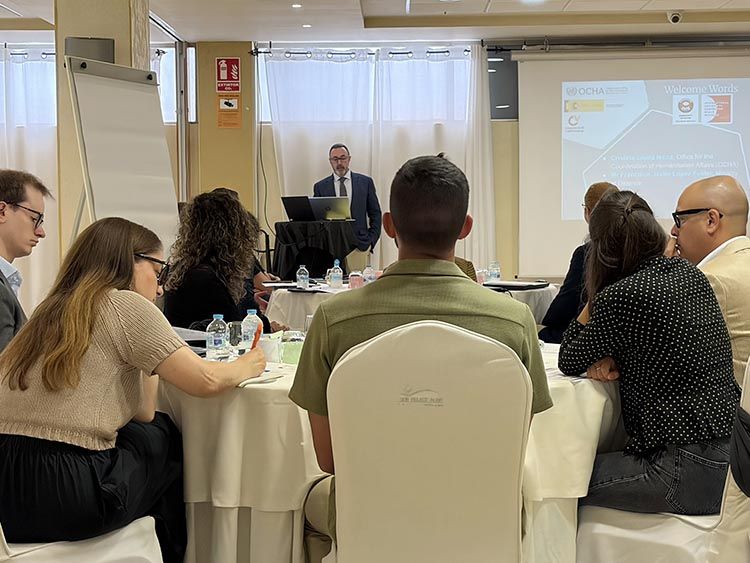
LaThe opening ceremony featured:
- Cristina López Iscoa, Humanitarian Affairs Officer and Lead Capability Development, OCHA.
- Francisco Javier López Fuster, Geopolitical Analyst and Navy Captain, Spanish Armed Forces.
- María Jaén, President of Helsinki España.
- Martine J.L. Mertens, Councillor for Foreign Communities, Alfaz del Pi.
- Isabel Muñoz, Councillor for Cooperation and Volunteering, Alfaz del Pi.
As part of the programme, the Alfaz del Pi City Council will also host an excursion for the participants to explore the municipality’s natural surroundings. This activity will provide an opportunity for participants from different countries and professional backgrounds to discover the local environment and strengthen the international and intercultural dimension of the course.
Helsinki España would like to express its sincere gratitude to the Generalitat Valenciana and the Spanish Ministry of Defence for their financial support, which makes the organization of this training possible. We would also like to thank the Alfaz del Pi City Council for its continued support and warm hospitality towards the participants, as well as for providing an ideal setting for this international training initiative.
Through this initiative, OCHA and Helsinki España reaffirm their commitment to strengthening the capacities of humanitarian professionals and promoting effective international cooperation, contributing to improved safety, effectiveness, and coordination in humanitarian operations where they are most needed.