Across Latin America, defending human rights too often means facing threats, intimidation and dangerous situations. Some people search for their missing relatives, while others advocate for the rights of LGTBIQ+ people, combat racism and discrimination, investigate human rights violations, expose hate speech and neoNazi movements, promote historical memory, support Indigenous communities and organisations, or advance women’s rights through feminist activism. Journalists also investigate abuses of power and serious human rights violations, while others have been forced to leave their countries and continue their work in exile to protect their lives.
Although their backgrounds and areas of work differ, they share a fundamental commitment to defending the dignity, freedom and rights of others. Their work is essential to democratic societies, yet it can place them in situations of considerable vulnerability.
Protecting those who defend human rights is also a way of protecting the rights of society as a whole
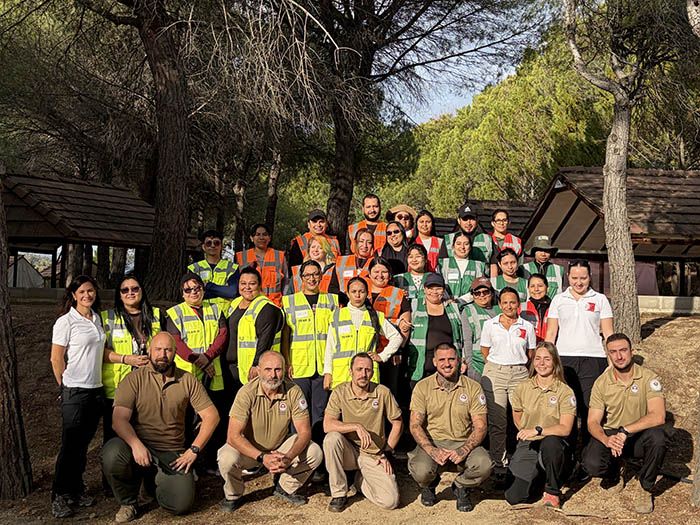
As part of its commitment to the training and protection of human rights defenders, the Carolina Foundation has awarded scholarships to 25 activists and human rights defenders from Latin America, who have taken part in a personal security and self protection coursedelivered by Helsinki España.
The training aims to equip participants with practical tools to identify risks, prevent dangerous situations and respond appropriately to potential threats, both in their professional activities and in their daily lives.
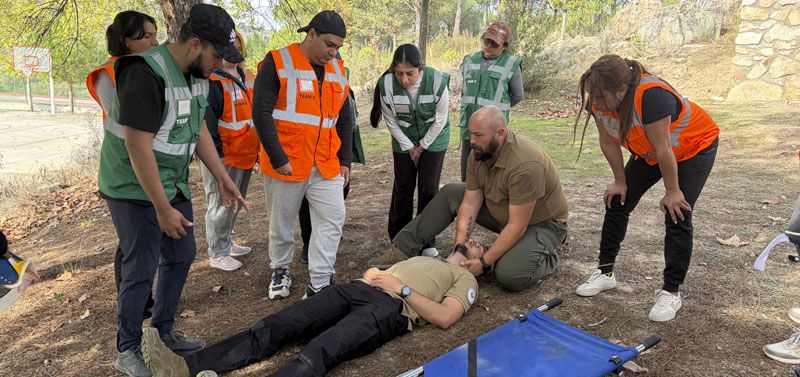
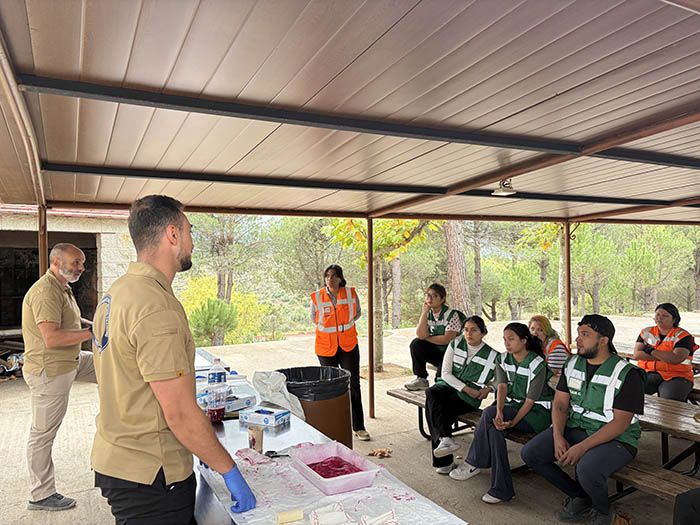
Throughout the course, participants have worked on a range of self protection techniques and strategies tailored to the risks they may face in their work. The training has included personal defence techniques, first aid, and response procedures for physical assaults, shootings and captivity situations, among other topics. The aim is to strengthen their ability to respond to emergencies, make decisions under pressure and improve their awareness of their own safety and that of the people around them.
Protection also means addressing the emotional impact of working in contexts of threat and uncertainty. The course has therefore incorporated psychological tools to manage stress, emotional distress and reactions to potentially traumatic situations. It has also created a safe and supportive space for dialogue, where participants have been able to share experiences, exchange practical tools and find support among people who understand the challenges of their work. These spaces help participants recognise that many of the difficulties they face are shared, strengthen mutual support networks and acknowledge the importance of caring for their own emotional wellbeing and that of others. Learning to recognise emotional responses, developing strategies to cope with them and having access to a support network are essential elements of personal security and self care.
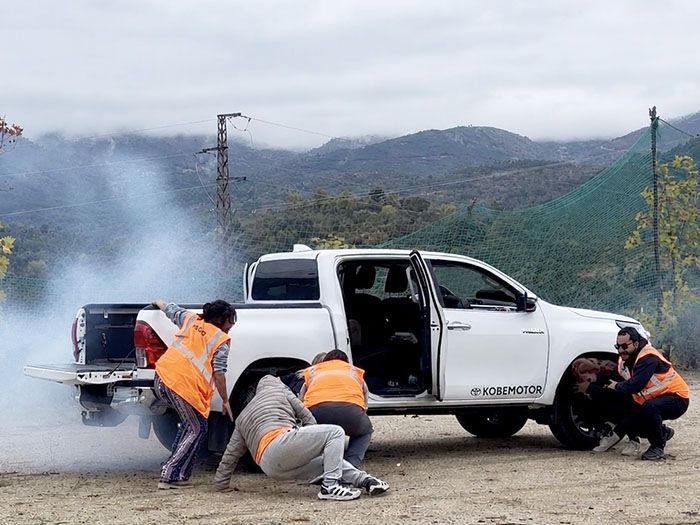
Helsinki España would also like to express its gratitude to Toyota KOBE Motor, which has provided the vehicles required for several practical workshops. Its contribution has been essential to activities such as safe vehicle entry and exit, as well as the extraction and assistance of accident victims. These exercises allow participants to practise procedures for responding to emergencies and dangerous situations in controlled conditions, strengthening the practical component of the training and providing them with additional tools to improve their safety.
The Carolina Foundation, Training, Support and Protection
Through its programmes supporting human rights defenders, the Carolina Foundation promotes opportunities for professional development, training and exchange for people working to defend fundamental rights in Latin America. Through its scholarships, the 25 participants are able to expand their knowledge, undertake professional placements related to their fields of work and share experiences with other individuals and organisations committed to human rights.
This support is particularly important for people who carry out their work in contexts of risk or vulnerability. Alongside professional training, the programme provides opportunities to develop security skills, access psychological support and participate in cultural exchange activities. These experiences contribute to participants’ wellbeing and help strengthen networks of cooperation and solidarity. Sharing experiences, learning about different realities and building relationships based on trust can help ensure that they do not have to face their challenges alone.
The Carolina Foundation’s work highlights the importance of a comprehensive approach to supporting human rights defenders, combining training, ongoing support and protection. Recognising the risks they face and providing them with the resources to address those risks are essential to enabling them to continue their work with greater safety and confidence.
At Helsinki España, we believe that personal security and self protection are essential tools for strengthening the work of human rights defenders. We are grateful to the Carolina Foundation for its trust and commitment, which make it possible to provide these tools to people whose work is vital to the protection of fundamental rights. We also recognise the value of their work and the importance of continuing to promote initiatives that support their training, wellbeing and protection.
Protecting those who protect others is a collective commitment to building a fairer, safer society that respects the rights of every person.
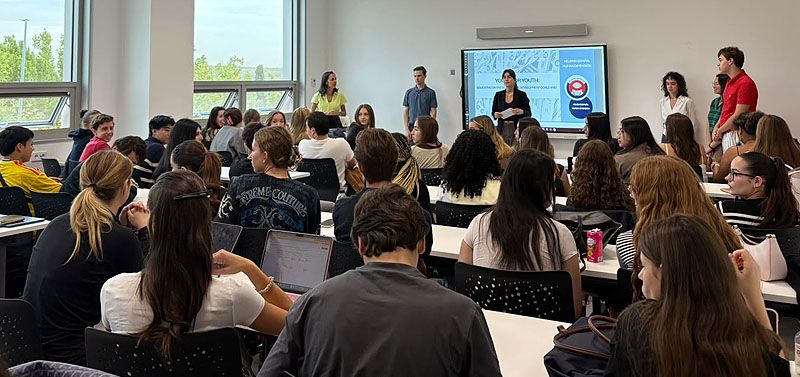
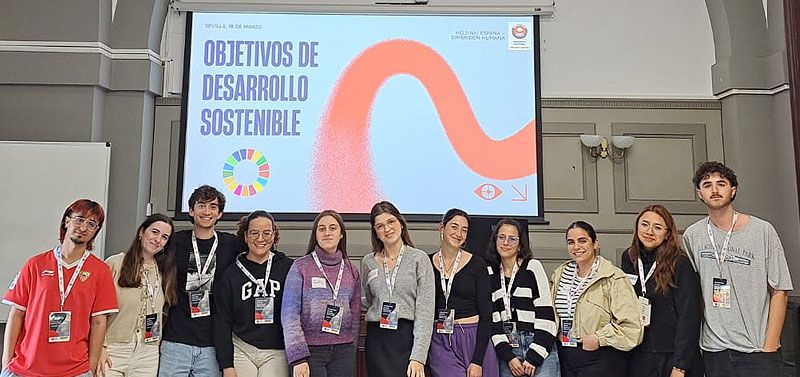
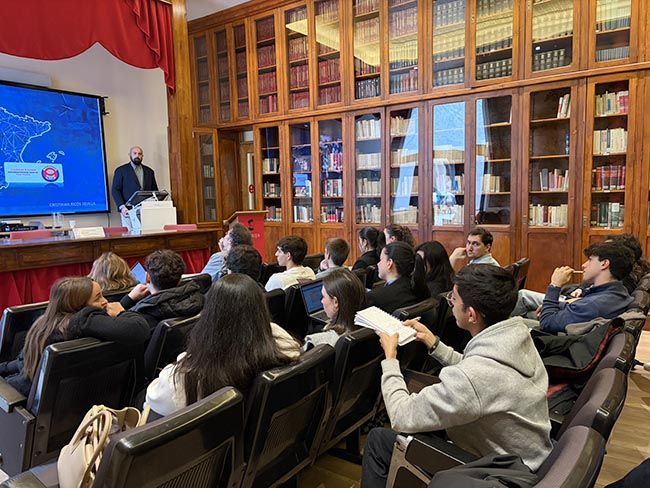
As part of the presentation of the training and volunteering project “Youth for Youth: Educating on Human Rights and Sustainable Development Goals“—an initiative by Helsinki España—students enrolled in the “Documentary Sources” course (part of the first year of the International Relations degree at the Universidad Europea) were introduced to the organization’s core commitments: promoting the defense of human rights, building a culture of peace, and advancing the Sustainable Development Goals (SDGs).
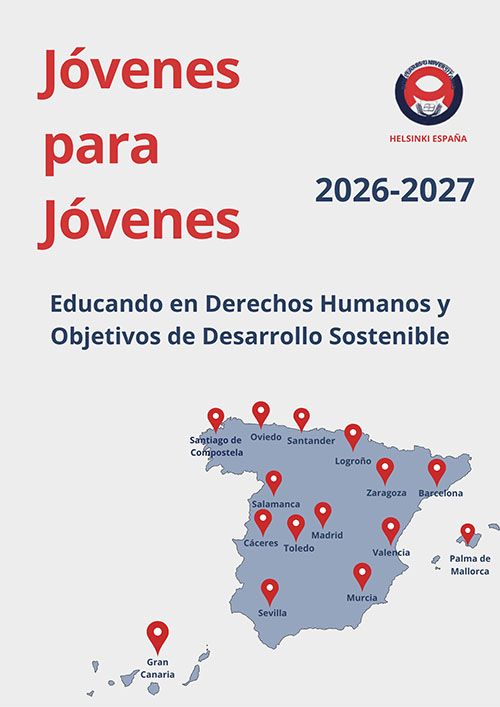
Since 2001, this project has been active across 15 autonomous communities in Spain, targeting university and vocational training students aged 18 to 30. Grounded in the Service-Learning (SL) methodology and peer-to-peer education, the initiative empowers young people to act as agents of social change. Following intensive training with experts, participants lead awareness-raising workshops in educational institutions on key topics such as gender equality, the prevention of cyberbullying, mental health, inclusion, and sustainability. In this context, the visit to the Universidad Europea aimed to introduce the project and invite students to join as active volunteers.
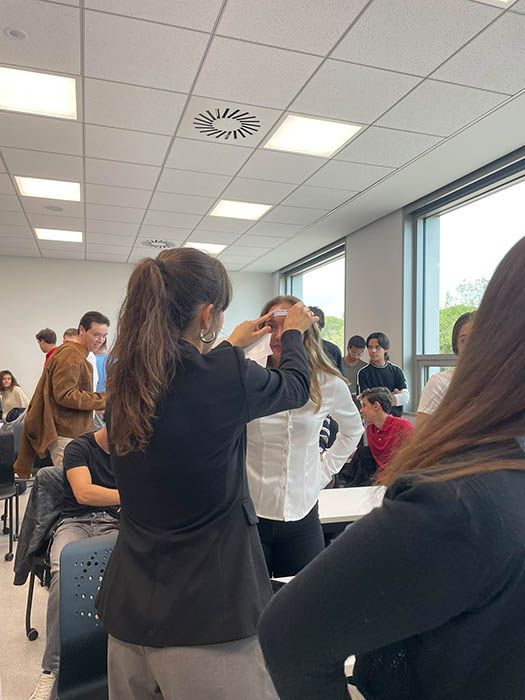
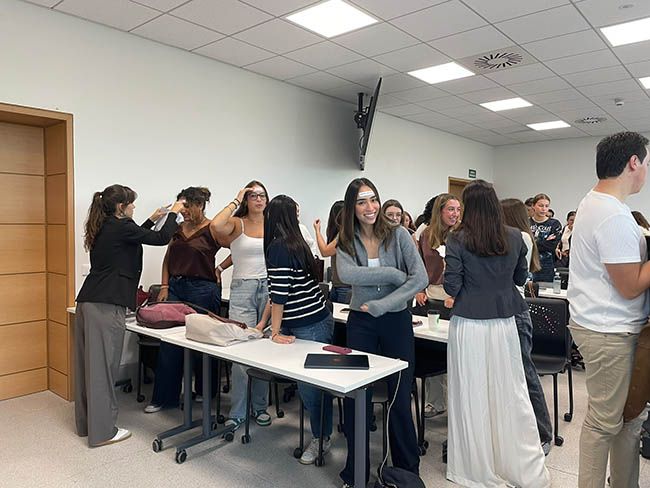
Following this institutional presentation, a session was held on information bias and tools for fostering critical thinking. As a result, the students gained the skills necessary to begin a practical exercise over the coming weeks: a news-clipping project focused on climate change. Through this activity, they will examine and compare how various media outlets address the environmental crisis, paying close attention to the narratives, journalistic biases, and editorial approaches used in covering climate action (SDG 13: Climate Action). Once the documentary analysis is complete, the students will present their findings, which will then be evaluated by Helsinki España.
The project’s first stop will take place in Santiago de Compostela from October 13 to 16. During this time, volunteers—hosted by the Faculty of Law at the University of Santiago de Compostela—will participate in workshops and presentations led by Helsinki España and its partner organizations. The goal is for them to develop into agents of change, bringing the knowledge they have gained into classrooms to work with children and adolescents through workshops and participatory activities.
This new cycle marks the beginning of a training program focused on key areas essential for building an inclusive, peaceful global society committed to human rights. The topics covered include human rights, the 2030 Agenda and the Sustainable Development Goals, gender equality, migration and refugees, cybersecurity and cyberbullying, homelessness, addiction prevention, and mental health.
Throughout the academic year, the project will be implemented across 15 autonomous communities, strengthening its nationwide reach and its educational and social impact within universities and schools throughout the country. With a 25-year history and thousands of young volunteers, “Youth for Youth” has established itself as one of Helsinki España’s flagship programs in the field of global citizenship education and youth participation.
Helsinki España expresses its gratitude for the support of its partner institutions and its technical and training team, as well as for the dedication of all the volunteers who ensure that education, social awareness, and transformative action continue to go hand in hand.”
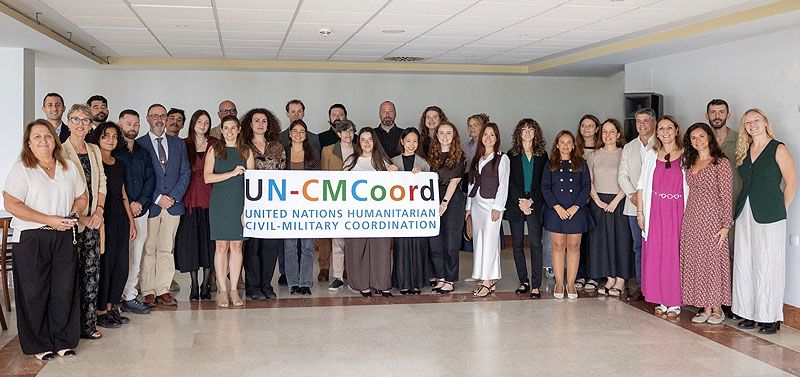
Led by OCHA, the course aims to train humanitarian professionals in coordination between civilian and military actors in emergency and conflict situations. Civil-military coordination is essential to ensure that humanitarian assistance reaches affected populations in a safe, effective, and coordinated manner.
This edition brings together 22 participants from 13 countries, representing different regions of the world, including North America, South America, Europe, Oceania, and the Middle East. A key feature of this edition is the diversity of professional backgrounds represented, bringing together military personnel and humanitarian professionals to strengthen mutual understanding and coordination between both sectors. The military component includes members of the Spanish Armed Forces and the Australian Defence Force, while the humanitarian sector includes professionals from United Nations agencies such as UNFPA and UNHCR, as well as international NGOs such as Médecins du Monde and INSO. This combination of civilian and military perspectives creates a valuable environment for participants to exchange experiences and develop a deeper understanding of the roles, responsibilities, and coordination mechanisms required in complex humanitarian contexts.
Civil-military coordination plays a particularly important role in complex emergencies and conflict situations. Effective coordination can help ensure that humanitarian actors are able to operate safely and independently, while facilitating communication and deconfliction with military actors when necessary. This contributes to making humanitarian operations more efficient and ensuring that assistance reaches affected populations.
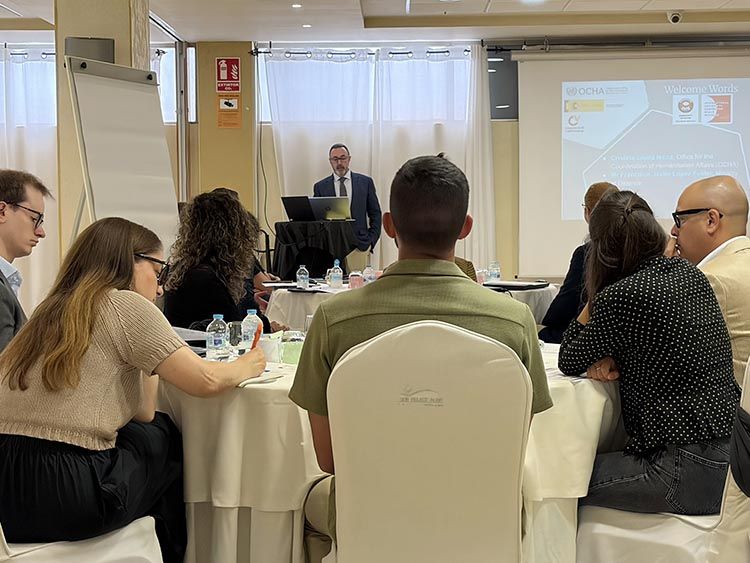
LaThe opening ceremony featured:
Cristina López Iscoa, Humanitarian Affairs Officer and Lead Capability Development, OCHA.
Francisco Javier López Fuster, Geopolitical Analyst and Navy Captain, Spanish Armed Forces.
María Jaén, President of Helsinki España.
Martine J.L. Mertens, Councillor for Foreign Communities, Alfaz del Pi.
Isabel Muñoz, Councillor for Cooperation and Volunteering, Alfaz del Pi.
As part of the programme, the Alfaz del Pi City Council will also host an excursion for the participants to explore the municipality’s natural surroundings. This activity will provide an opportunity for participants from different countries and professional backgrounds to discover the local environment and strengthen the international and intercultural dimension of the course.
Helsinki España would like to express its sincere gratitude to the Generalitat Valenciana and the Spanish Ministry of Defence for their financial support, which makes the organization of this training possible. We would also like to thank the Alfaz del Pi City Council for its continued support and warm hospitality towards the participants, as well as for providing an ideal setting for this international training initiative.
Through this initiative, OCHA and Helsinki España reaffirm their commitment to strengthening the capacities of humanitarian professionals and promoting effective international cooperation, contributing to improved safety, effectiveness, and coordination in humanitarian operations where they are most needed.
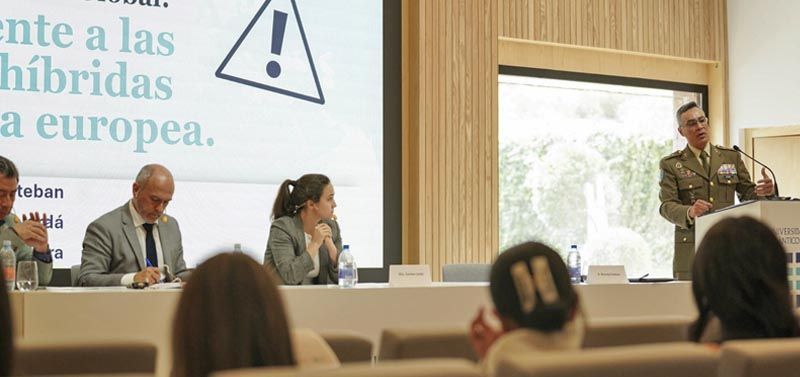
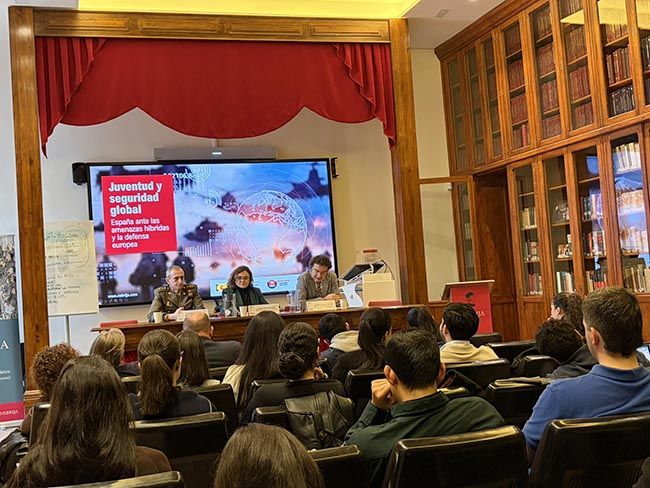
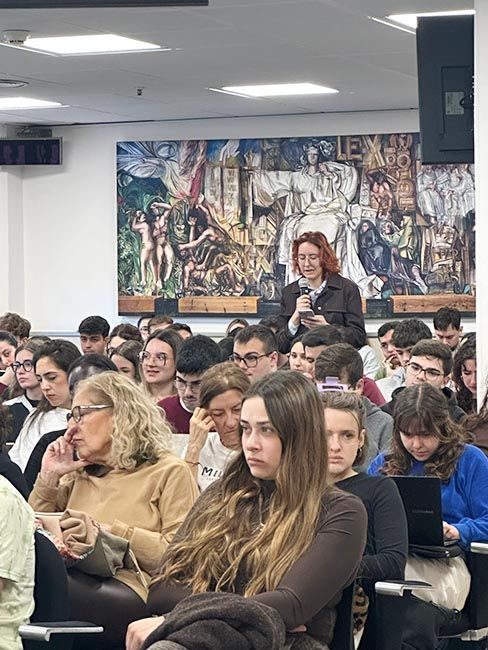
Held between February and March 2026, these sessions took place across five universities in Span, Nebrija University, University of Valencia, Autonomous University of Barcelona, Atlantic University of the Middle, and University of Deusto, bringing together around 250 students. During the sessions, participants had the opportunity to engage with high-level experts, bringing together academia, the military, and diplomacy. They were able to exchange views with figures Colonel José Luis Calvo Albero, Major General Ricardo Esteban, and Sergeant Christian Ricós Sevilla, an expert in terrorism, all of whom contributed to a deeper understanding of the current challenges in international security.
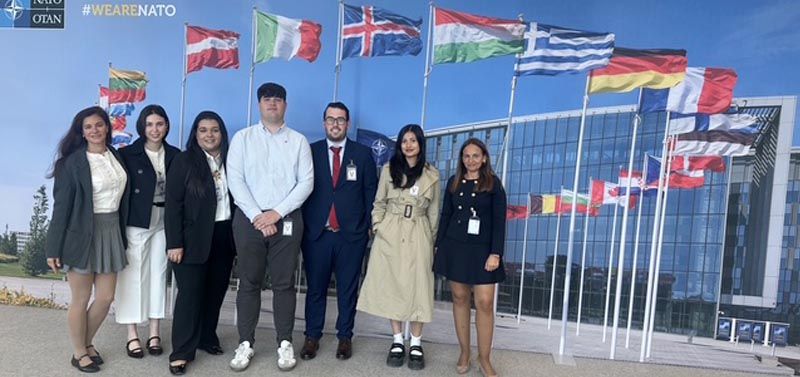
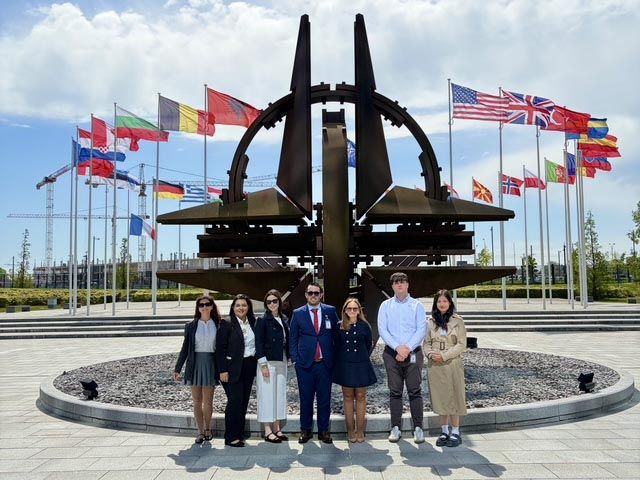
As a final highlight, those who stood out for their participation, through the creation of a reel on the role of Europe in global security, were selected to take part in a unique experience in Brussels, the political heart of Europe, this past April.
Inmersion in international institutions
The trip allowed this group to gain first-hand insight into the main institutions and geopolitical dynamics of the continent. One of the key moments was the visit to NATO, where they held a meeting with Adela Díaz Bernárdez, Deputy Permanent Representative of Spain to the North Atlantic Council, and Jorge Lens Blanco, Deputy Defence Counsellor.
In a confidential setting, the discussion addressed essential issues such as NATO’s current role, Spain’s involvement in the organisation, and the main challenges of global security in an increasingly complex international context. The session provided a realistic and strategic perspective that is difficult to access from an academic environment.
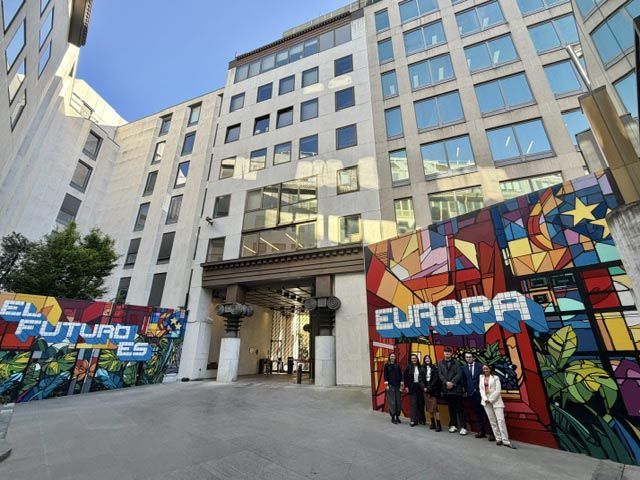
Another key meeting took place at the Permanent Representation of Spain to the European Union. There, the group met with Nuño Santos, Counsellor at the Office of the Permanent Representative of Spain to the EU. Nuño shared his perspective in an open and approachable manner on European security and defence policy, as well as the geopolitical constraints and challenges currently facing the European Union.
Beyond politics: a cultural experience
The trip was not limited to institutional engagement. It also allowed the group to discover the cultural richness of Brussels, exploring its history, diversity, and gastronomy, all of which form part of the broader context in which European political decisions are made.
Youth engaged in the global future
This initiative reflects Helsinki España’s strong commitment to fostering a critical, informed, and active youth in international affairs. By connecting academic learning with real-world experiences in decision-making spaces, the programme contributes to shaping a new generation prepared to face the challenges of global security.
The experience in Brussels has not only been a recognition of the talent and engagement of the students, but also an opportunity to inspire vocations and strengthen the role of youth in building a safer and more cooperative future.
At a moment marked by conflicts such as the war in Ukraine, the crisis in Lebanon, and the growing migratory pressures affecting Europe and, in particular, Spain, the so-called “new world order” occupies the center of the global agenda, as reflected in the recent Munich Security Conference. In this context, it is more necessary than ever to create spaces where young people can understand, analyze, and actively engage with the challenges that will shape the future.
Because a strong society is built not only by institutions, but also by an informed, critical, and committed citizenry.
Five cities, one conversation
Between February and March 2026, Helsinki España organized the cycle of conferences “Youth and Global Security”, held at five universities across Spain:
Universidad Nebrija (Madrid)
Universidad de Valencia (Valencia)
Universidad Autónoma de Barcelona (Barcelona)
Universidad del Atlántico Medio (Las Palmas de Gran Canaria)
Universidad de Deusto (Bilbao)
Approximately 250 students participated in these sessions, engaging with high-level speakers including Colonel José Luis Calvo Albero in Madrid and Major General Ricardo Esteban in the Canary Islands.
Key topics for understanding security today
The cycle covered the main challenges shaping the current global security landscape:
Threats to the security of Spain and Europe
Cognitive warfare and hybrid conflicts
The evolution of terrorism in the international context
The role of major powers such as United States, China, and Russia
The role of the European Union in collective defense
Emerging issues were also explored, such as the impact of new technologies on conflicts, artificial intelligence applied to security, radicalization and the prevention of violent extremism, and the psychology of terror.
Youth: a driving force in global security
A central message of the cycle was the decisive role of youth in building resilient societies. Faced with manipulation, disinformation, or radicalization, young people are not only recipients of risks, they are key agents in generating solutions.
The conferences appealed directly to their civic engagement and responsibility as active citizens, particularly in defending democratic values and combating extremism.
Global security is not only a matter of states—it is also a generational conversation.
Looking towards Europe
As part of the program, five participants have been selected to travel soon to Brussels, where they will visit European institutions and Spain’s Permanent Representation to the EU, reinforcing the practical and experiential dimension of the project.
For several years, Helsinki España has organized conferences and sessions on Security and Defense, aiming to involve youth in strategic and global debates. This commitment continues, and we will keep holding these initiatives to foster critical thinking, active participation, and civic responsibility among new generationss.
Because understanding the world is the first step to transforming it.