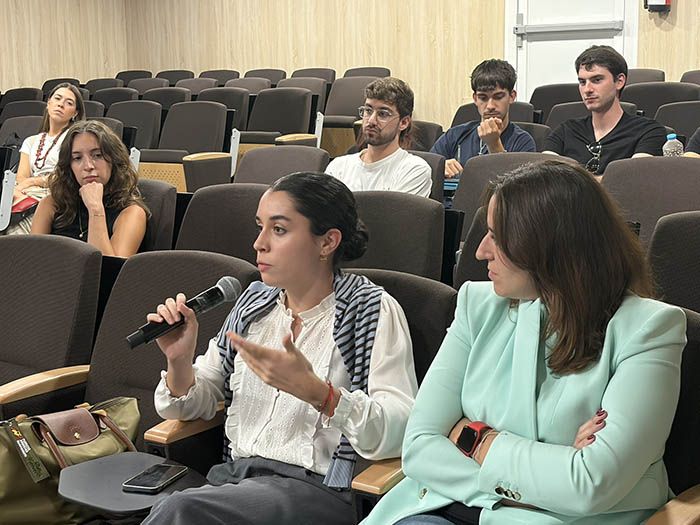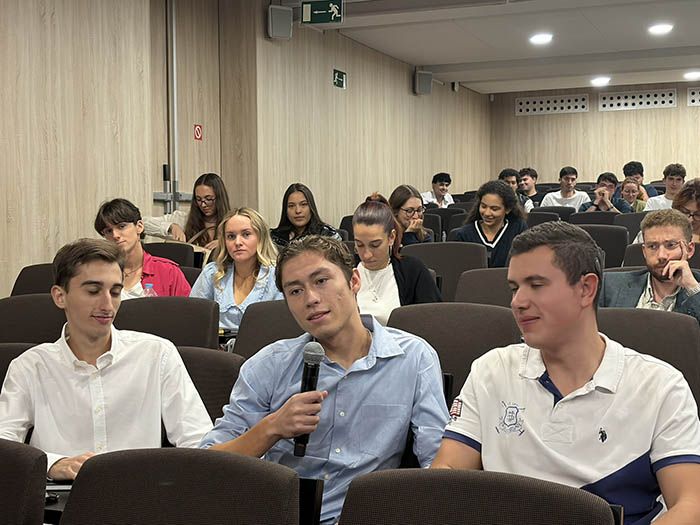
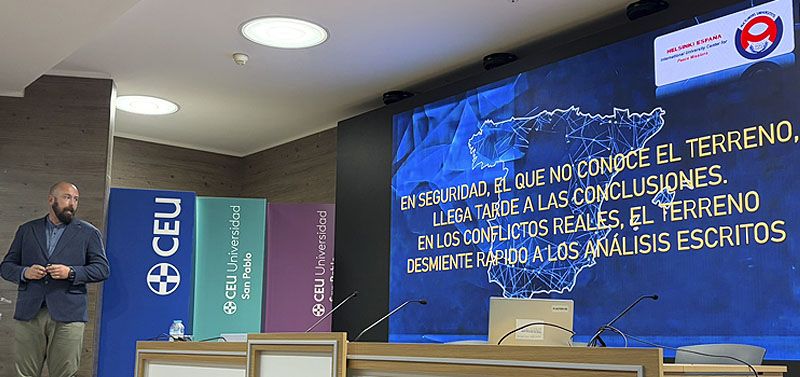
On 14 October, Helsinki España held the “Challenges and Threats to International Security 2026” conference at the Faculty of Economics of Universidad CEU San Pablo, with funding from the Spanish Ministry of Defence and in collaboration with the CEU Institute for the Study of Democracy. The event provided a forum for analysis, dialogue and reflection on the main challenges facing global and national security in an increasingly complex geopolitical environment.
The conference brought together more than 100 attendees, mainly students and young professionals interested in geopolitics, security and defence. Its aim was to bring contemporary security challenges closer to society, particularly to younger generations, raising awareness of international security, disinformation and terrorism.
These annual conferences, organised by Helsinki España, respond to the need to promote critical thinking and interdisciplinary debate on the global threats of the 21st century. In a context shaped by geopolitical crises, regional conflicts, cyber threats and environmental challenges, joint reflection across academic, military and diplomatic sectors is essential to developing a stronger, more humane and cooperative approach to international security.
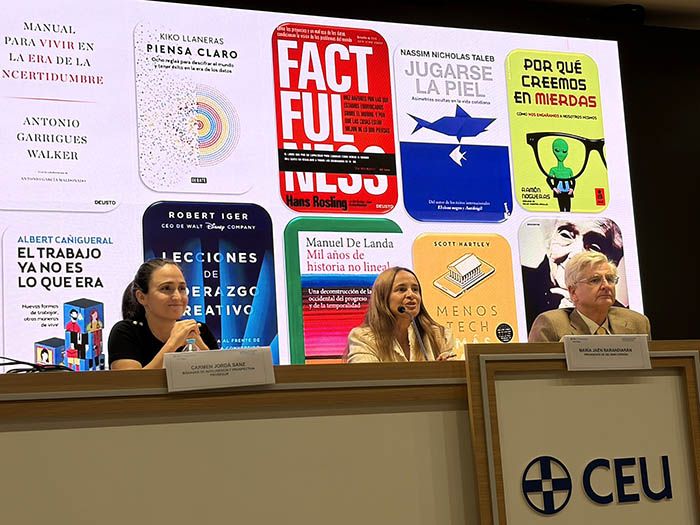
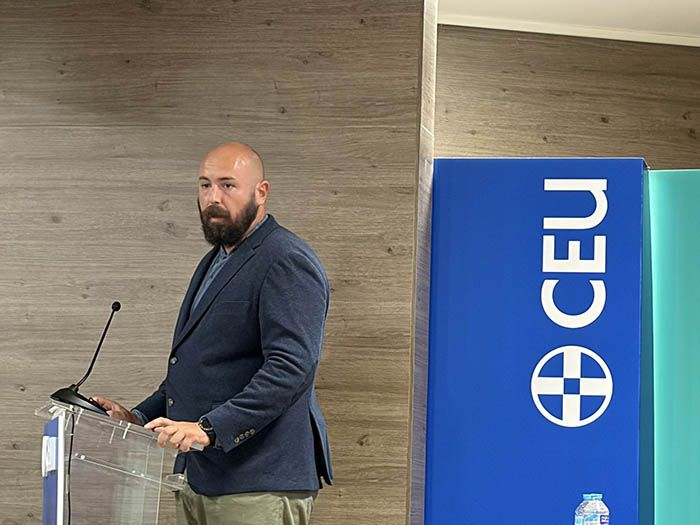
Opening Remarks
Alfonso Martínez-Echevarría, Dean of the Faculty of Law at Universidad CEU San Pablo, and María Jaén, President of Helsinki España, opened the conference. They highlighted the human dimension of security and the importance of cooperation between institutions in strengthening social resilience.
Highlights from the Conference
- Silvia Cortés Martín, former Spanish Ambassador to Ukraine during the conflict, offered an in depth perspective on international conflicts and tensions. She highlighted the many crises that do not always receive media attention, as well as the growing prevalence of hybrid warfare. She also shared her first hand experience in the field and her perspective on the war between Russia and Ukraine.
- Mario Laborie Iglesias, Colonel in the Spanish Army, PhD in International Security and specialist in Strategic Studies, addressed Spain’s perspective on international conflicts and the key characteristics of hybrid warfare. He also emphasised Spain’s role and responsibilities as a member of NATO and the European Union.
- Antonio Alonso Marcos, Director of the Master’s Degree in Intelligence Management, Operations and Analysis at Universidad CEU San Pablo, presented his research on current and future conflicts, as well as the defining characteristics of emerging forms of warfare.
- Federico Aznar Fernández-Montesinos, Navy Commander and Professor of Strategy and International Relations at CESEDEN, highlighted the importance of communication during conflicts and the role of cultural narratives in shaping how they are understood.
- Carmen Jordá Sanz, from Universidad Camilo José Cela, reflected on the impact of disinformation on democracies and emphasised the importance of maintaining a critical and ethical perspective on the control and circulation of information.
- Christian Ricós Sevilla, an expert in radicalisation and terrorism, delivered a presentation on the phenomenology of terror. He challenged common myths surrounding the notion of a “terrorist personality” and explored the symbolism and motivations associated with Salafism, as well as the key role of citizen participation.
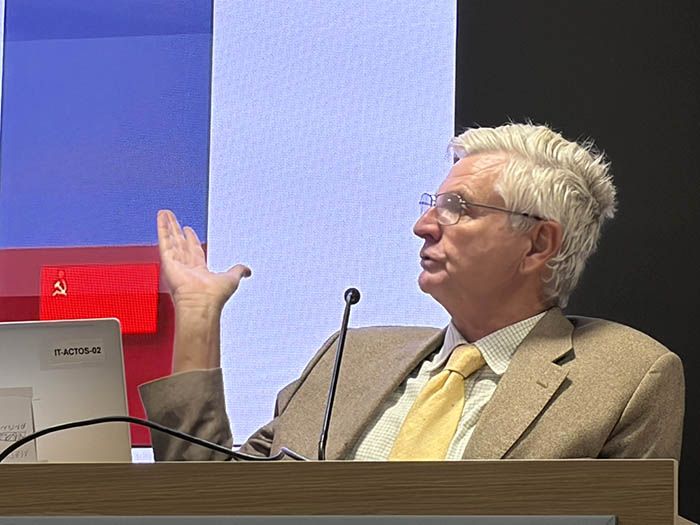
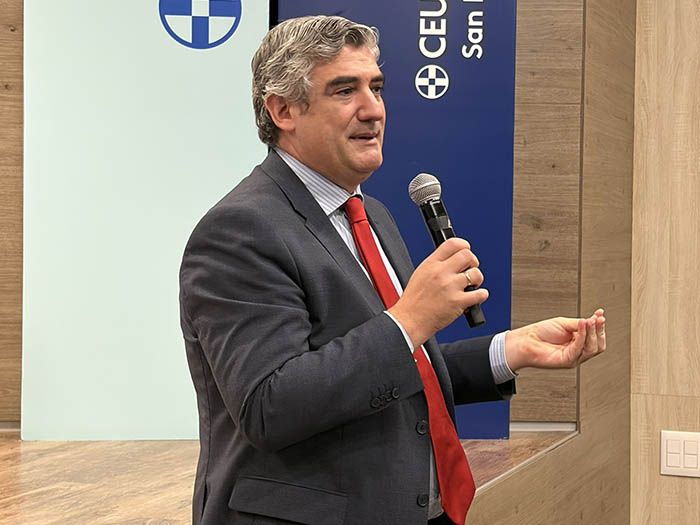
At Helsinki España, we would like to express our sincere gratitude to the Spanish Ministry of Defence for its support and funding, and to Universidad CEU San Pablo for its collaboration and hospitality.
Thanks to their commitment, the conference was made possible, further strengthening our mission to promote education, cooperation and the development of a safer, better informed and more aware society.