

Working at the United Nations (UN) is a career goal for many people interested in diplomacy, human rights, international cooperation, or peacebuilding.
Every year, students and professionals ask us how to work at the UN and what kind of training is required to build a career within the United Nations system or other international organizations. This article summarizes the key information.
The UN is one of the largest international organizations in the world, with 15 autonomous specialized agencies (such as WHO, UNESCO, FAO, and IMF) and multiple funds and programmes (including UNICEF, UNDP, UNHCR, and WFP) working in more than 190 countries. In total, the UN system includes over 30 entities across diverse professional fields.
This diversity means there are many different career paths within the UN system. Some of the main areas of work include:
- Human Rights: Professionals who monitor human rights situations, prepare reports, or participate in international missions.
- International Cooperation and Development: Specialists designing and implementing programmes in education, health, gender equality, or sustainability.
- Peacebuilding and Conflict Resolution: Experts in mediation, conflict prevention, and peace processes.
- International Communication: Teams responsible for public information campaigns, institutional communication, and media relations.
- Project Management and Administration: Professionals handling programme management, logistics, finance, and human resources.
1. What Degree or Education is Needed to Work at the UN?
There is no single degree required to work at the UN, as the organization seeks multidisciplinary profiles. Common degrees among international organization professionals include:
- International Relations
- Law
- Political Science
- Economics or Business Administration
- Communication
- Sociology
- Psychology
- Development Studies
- Engineerin
Beyond academic qualifications, specialized training and international experience are critical for entering international organizations and UN missions.
Training for International Missions: The REACT Course
One of the most effective programmes for international careers is the REACT course (Rapid Expert Assistance and Cooperation Teams) organized by the International University Centre of Peace Missions (IUCPM) of Helsinki España.
The REACT programme originated from an initiative of the Organization for Security and Co-operation in Europe (OSCE) in 1999 during the Istanbul Summit, which created civilian teams trained for rapid deployment in conflict prevention, crisis management, and post-conflict rehabilitation.
Since 2003, IUCPM has run the REACT course to train professionals with the skills needed to participate in missions led by the UN, OSCE, EU, and international NGOs.
This five-week intensive programme offers:
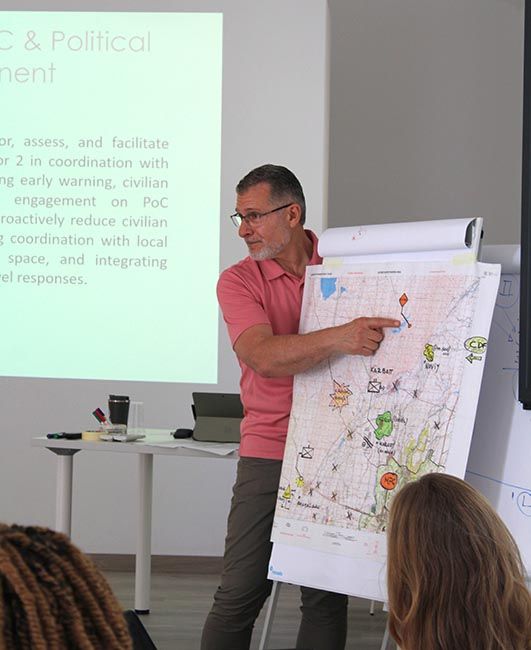
- Practical training: over 220 hours of in-person classes simulating real UN and international mission scenarios.
- Field-relevant skills: monitoring human rights, analyzing conflicts, coordinating civil-military operations, and understanding humanitarian law.
- Experienced faculty: instructors with professional backgrounds in international organizations, field missions, and humanitarian agencies, including individuals who work/ have worked for the UN both in missions and agency offices.
- Professional guidance: orientation on opportunities such as United Nations Volunteers (UNV).
Participants of the 30 editions of REACT have gone on to careers in international organizations, humanitarian agencies, public administrations, and civil society.
Why REACT Prepares You for International Careers
- Practical approach: training applied to real-world scenarios in international missions and multilateral organizations.
- International professional network: connect with students and professionals from multiple countries.
- Understanding the international system: gain insight into UN operations and key multilateral programmes.
Learn more about the REACT course, and explore how it can prepare you for a career in international organizations.
2. Skills Needed to Work at the UN
In addition to academic credentials, UN recruiters value the following competencies:
- Analytical capacity: understand complex political, social, and humanitarian contexts.
- Intercultural communication: work effectively in diverse international teams.
- Teamwork: collaborate in multidisciplinary, multinational teams.
- Negotiation and conflict resolution: crucial in diplomatic processes and international missions.
- Adaptability: operate effectively in diverse countries and changing environments.
3. Languages Needed to Work at the UN
- English: primary language for most UN roles.
- French: highly valued, especially in diplomacy and international missions.
- Other official UN languages: Arabic, Chinese, Russian, Spanish.
Speaking multiple languages significantly enhances career opportunities in international organizations.

Frequently Asked Questions about Working at the UN
Q: Can you work at the UN without a master’s degree?
Some UN positions require a master’s, especially in fields like international relations, law, or development studies. Entry-level programmes and internships may accept candidates with a bachelor’s degree plus relevant experience. Specialized training and international exposure strengthen your profile.
Q: What degree is best for working at the UN?
There is no single degree. UN careers welcome professionals from international relations, law, political science, economics, communication, social sciences, and engineering, especially when combined with experience or training in international cooperation, human rights, or peacebuilding.
Q: Do you need international experience to work at the UN?
Yes, it is highly valued. Experience with NGOs, international organizations, humanitarian missions, or international projects helps professionals understand global operations. Programs like REACT provide hands-on training for these environments.
Q: How can I start a career in international organizations?
Start with internships, volunteer programmes, or specialized training in international cooperation, human rights, or peace missions. The REACT course equips students with practical knowledge and networks for careers in multilateral organizations.
Start Your International Career
If you want to pursue a career in human rights, international cooperation, diplomacy, or international missions, specialized training on how organizations operate internationally is key.
The REACT course by IUCPM provides practical skills, field knowledge, and professional networks that help participants prepare for careers in UN missions, multilateral institutions, and humanitarian programmes.
For more information about the next edition, selection process, and programme content, write to: