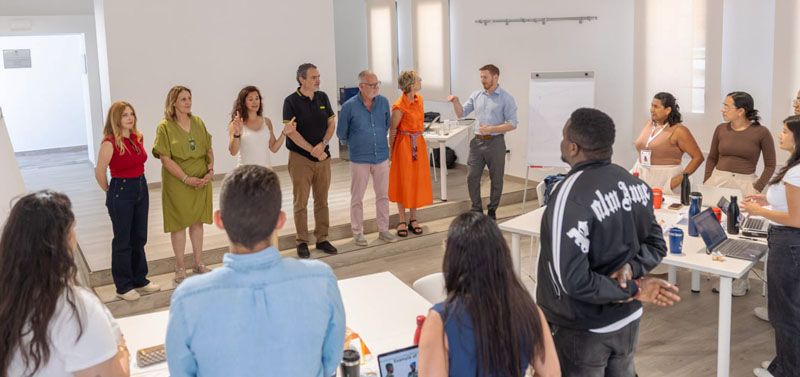
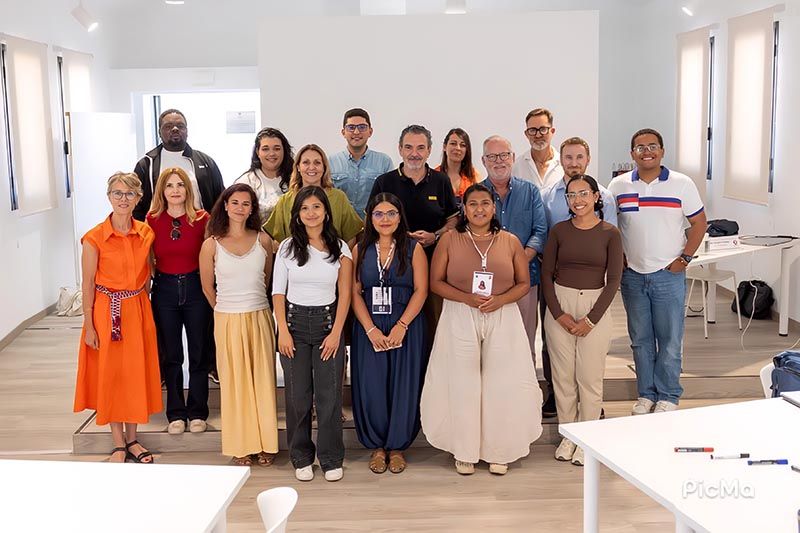
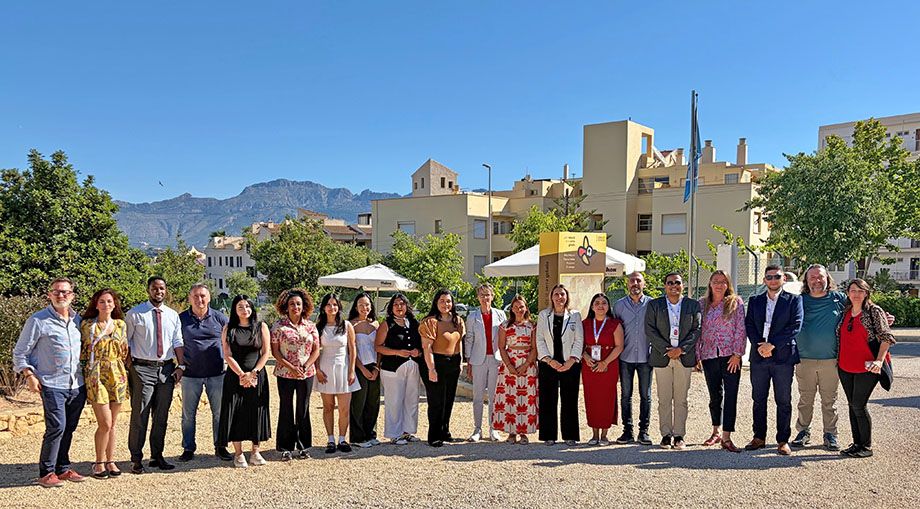
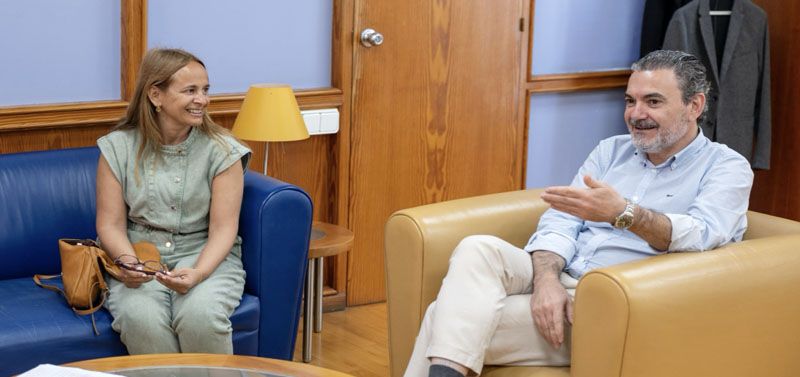
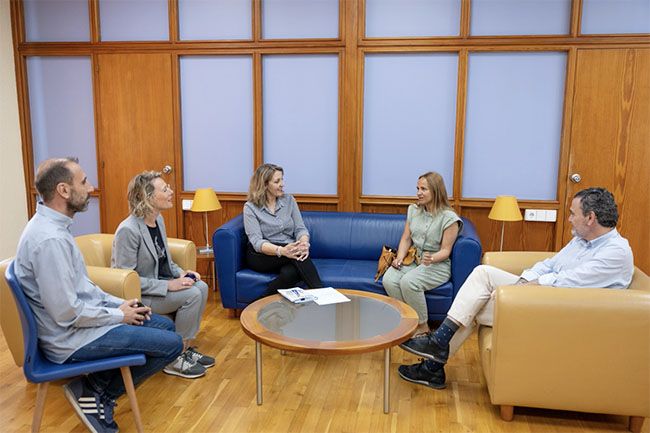
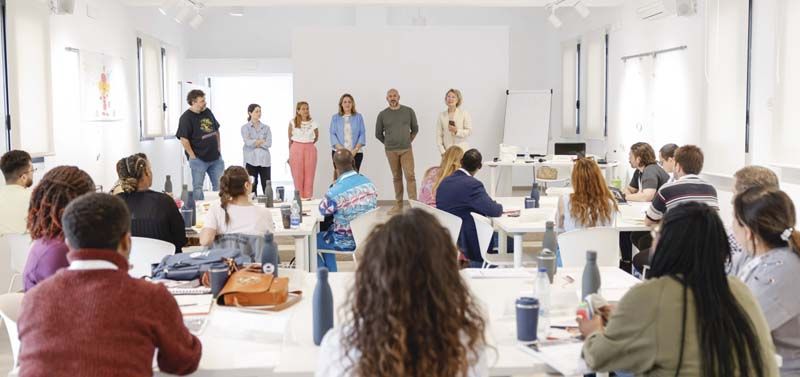
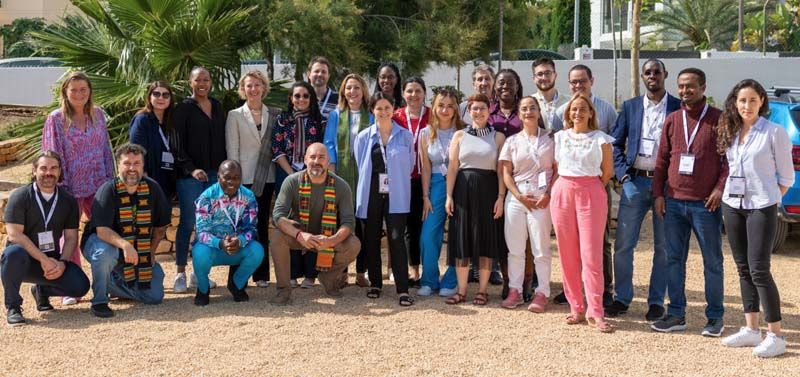
The visit of Vicente Arques, Mayor of l’Alfàs del Pi, to the participants of the REACT course just a few days before the closing ceremony once again highlighted the municipality’s strong commitment to international cooperation, human rights, and the training of professionals working in some of the world’s most challenging environments.
During the visit, the Mayor had the opportunity to meet the international participants, learn first-hand about their experiences, and reaffirm the municipality’s support for initiatives that promote peace, solidarity, and cooperation among peoples.
The visit symbolizes a partnership that Helsinki España and the Municipality of l’Alfàs del Pi have strengthened over the years and continue to develop with a shared vision: positioning the municipality as an international hub for specialized humanitarian training and international missions.
Over the course of several weeks, l’Alfàs del Pi has become a truly international campus, welcoming participants from 10 different nationalities with a wide range of professional backgrounds. The course brings together both civilian and military professionals, fostering a unique exchange of knowledge that represents one of REACT’s greatest strengths. This interaction enables participants to better understand each other’s roles, capabilities, and operational approaches while reinforcing civil-military coordination, an essential component of effective humanitarian response, peace support operations, and post-conflict stabilization.
The diversity of the group is also reflected in their academic and professional backgrounds. Lawyers, political scientists, international relations specialists, social workers, engineers, humanitarian practitioners, members of the armed forces, public administration professionals, and representatives of international organizations work side by side, sharing experiences and methodologies in an interdisciplinary learning environment that enriches everyone’s training.
The REACT experience extends well beyond the classroom. During their stay, participants have had the opportunity to discover the natural and cultural heritage of l’Alfàs del Pi and its surroundings, enjoying the municipality’s beaches, the scenic trail leading to the Albir Lighthouse, and other attractions across the Marina Baixa region. These activities encourage interaction among participants from different cultures and countries, helping to build an international network of professionals committed to peace and humanitarian action. In a programme where intercultural cooperation is one of its fundamental pillars, the experiences shared outside the classroom are just as valuable as the academic training itself.
A Partnership That Continues to Grow
The collaboration between Helsinki España and the Municipality of l’Alfàs del Pi has fostered a growing ecosystem of training initiatives focused on peace, security, and international cooperation.
Thanks to the Municipality’s institutional support, the provision of municipal facilities, and the joint promotion of educational activities, l’Alfàs del Pi has established itself as the venue for a range of national and international training programmes. In addition to hosting six editions of the REACT course, the municipality has welcomed the United Nations Civil-Military Cooperation Course, the Security and Self-Protection Course, and the Agenda 2030 Challenges conference series, creating a comprehensive programme that brings together professionals, researchers, public institutions, and citizens to address today’s most pressing global challenges. This successful collaboration lays the foundations for expanding future training opportunities and further establishing l’Alfàs del Pi as an international meeting point for humanitarian professionals.
A Municipality with an International Vocation
With more than half of its residents coming from international backgrounds, l’Alfàs del Pi is one of Spain’s most multicultural municipalities. This unique social fabric makes it an ideal setting for promoting intercultural dialogue, peaceful coexistence, and international cooperation, values that are fully aligned with the mission of Helsinki España.
The municipality’s connection to peacebuilding, however, predates its collaboration with Helsinki España.
Long before these joint initiatives began, l’Alfàs del Pi had already established a significant link to peace studies through the presence of Professor Johan Galtung, widely regarded as one of the founding figures of Peace and Conflict Studies. Founder of the world’s first peace research institute in Oslo, United Nations consultant, international mediator, and recipient of both the Gandhi Peace Award and the Right Livelihood Award, Galtung lived in l’Alfàs del Pi for many years, where he wrote a substantial part of his work and helped associate the municipality with academic research on conflict resolution and peacebuilding.
Today, decades later, that legacy continues through the collaboration between the Municipality and Helsinki España, supporting programmes that prepare future generations of professionals to address the humanitarian challenges of the twenty-first century.
Mayor Vicente Arques’ visit to the REACT course therefore represents far more than an institutional engagement. It reflects a shared commitment to education, international cooperation, and the continued development of a municipality that embraces the world through solidarity, diversity, and peace.
REACT launches its 30th edition in Alfaz del Pi, consolidating its position as one of the leading international programs in peacebuilding.
This Monday, May 25, the opening ceremony of the REACT course (Rapid Expert Assistance and Cooperation Teams) took place in El Albir, Alfaz del Pi (Alicante). Organized by Helsinki España, REACT is an international training program specialized in peacebuilding, humanitarian action, crisis response, and international missions.
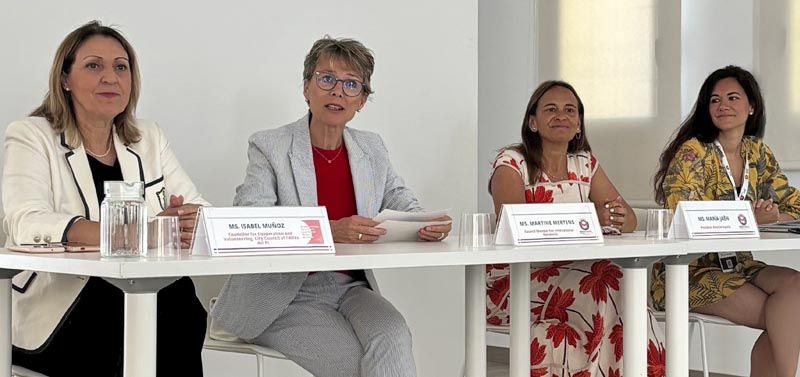
The opening ceremony brought together representatives from local institutions and the organizing team, including:
Ms. Isabel María Muñoz Llorens, Councilor for Cooperation and Volunteering of the Municipality of l’Alfàs del Pi;
Ms. Martine Mertens, Councilor for Residents of Other Nationalities of the Municipality of l’Alfàs del Pi;
Ms. Beatriz Boris, Director of the International University Centre for Peace Missions (IUCPM);
Ms. María Jaén Barandiarán, President of Helsinki España, who officially welcomed the participants on behalf of the organizing team.
During the inauguration, speakers highlighted the growing importance of specialized training in a global context increasingly affected by armed conflicts, humanitarian crises, forced displacement, organized violence, and instability.
The Municipality of l’Alfàs del Pi welcomed the international participants and reaffirmed its commitment to initiatives that promote peace, coexistence, and intercultural understanding. Participants were also encouraged to explore the municipality and enjoy its natural surroundings, taking advantage of their free time to discover its coastline, beaches, and the trails of the natural park.
María Jaén Barandiarán, President of Helsinki España, thanked the Municipality of l’Alfàs del Pi for its continued institutional support and hospitality in hosting the course, as well as the collaboration of the Spanish Ministry of Defense and Fundación Carolina for their longstanding support of the program. She also acknowledged the commitment of the participants, who have chosen to dedicate their professional careers to humanitarian response, international cooperation, peacebuilding, and human rights.
REACT is the flagship international training program of Helsinki España: a comprehensive and intensive 220-hour residential training program focused on conflict prevention, crisis management, civilian protection, international humanitarian law, and post-conflict rehabilitation. The program waslaunched in 2003 following OSCE (Organization for Security and Co-operation in Europe)guidelines aimed at strengthening the rapid deployment of trained civilian experts to international peace missions and humanitarian operations. The program has received the support of the United Nations and the Spanish Ministry of Foreign Affairs, European Union and Cooperation.
Now celebrating its 30th edition, REACT has become a consolidated and internationally recognized training program in the fields of peacebuilding and humanitarian action. Over the last two decades, more than 600 professionals from over 70 countries have participated in the program, many of whom now work with organizations such as the United Nations, the OSCE, the European Union, the Red Cross, governmental agencies, armed forces, and international NGOs operating in conflict and crisis settings worldwide.
REACT 2026 runs from May 25 to June 26 and brings together participants from 10 different nationalities, including Panama, Mexico, Cameroon, Syria, Ethiopia, Somalia, and Uganda. The faculty is composed of more than 25 lecturers and instructors from 10 different nationalities, bringing together extensive international experience in peace operations, humanitarian coordination, mediation, human rights, and security training.
Participants come from diverse professional backgrounds including humanitarian organizations, armed forces, public institutions, governmental agencies, international organizations, and consultancies. This multidisciplinary composition is one of the key strengths of the program, fostering cooperation and exchange between civilian and military perspectives in international missions.
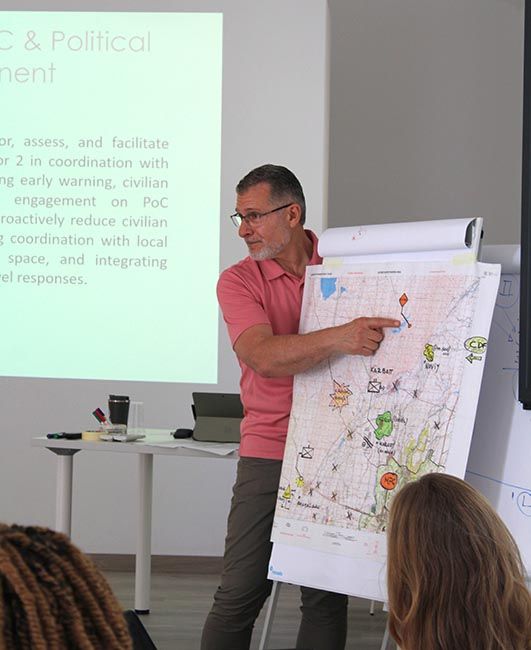
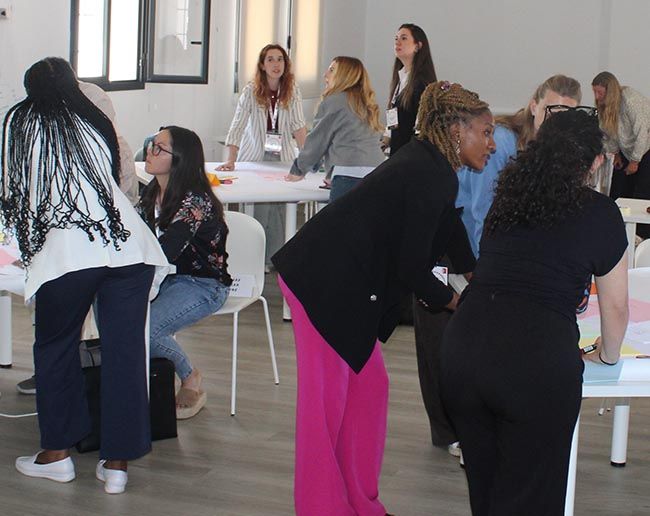
REACT is characterized by its highly practical methodology. Throughout the five weeks of training, participants work on real conflicts and humanitarian scenarios through simulations, case studies, role-playing exercises, negotiation dynamics, and field-security training. Key topics addressed include conflict analysis and prevention, civilian protection, international humanitarian law and human rights, peacebuilding, disarmament and reintegration processes, organized crime, disinformation and radicalization, gender perspective, and stress management in hostile environments.
The course will conclude with an intensive practical field week based on the HEAT (Hostile Environment Awareness Training)methodology, designed to prepare participants to operate safely, effectively, and professionally in high-risk environments.
At a time when the international community faces increasingly complex humanitarian and security challenges, REACT continues to strengthen an international network of professionals committed to peace, human dignity, and international cooperation. Through this initiative, Helsinki España reaffirms its commitment to training the next generation of experts capable of responding rapidly and effectively to crises and peace operations around the world.
For three decades, REACT has served not only as a training course, but also as a meeting point for professionals committed to dialogue, protection of civilians, and sustainable peace. The 30th edition of the program represents a milestone in Helsinki España’s continued effort to promote professional, practical, and internationally oriented peace training.
In a world where conflicts seem never-ending, security threats are evolving faster than the solutions to address them.
Deep-rooted conflicts, organized crime, terrorism, hybrid wars facilitated by new technologies, and the erosion of nuclear arms treaties paint an increasingly complex and uncertain global picture. In this context, specialized training in conflict analysis, field security, and international peace threats becomes essential for professionals working in cooperation, human rights, and diplomacy.
Deep-Rooted Conflicts, Power Dynamics, and Organized Crime
Although mortality from conventional wars has declined, prolonged conflicts continue to affect millions of people, especially when non-state actors such as militias, terrorist groups, or criminal networks are involved. Unresolved tensions, structural corruption, and resource scarcity exacerbated by climate change generate persistent conflicts that cross borders, as seen in Syria or Yemen.
Understanding these scenarios requires analyzing all actors involved, including less obvious ones: informal economic interests, local power structures, non-institutionalized political actors, and community dynamics that indirectly sustain violence. Conflict-sensitive programming is essential to design interventions that do not reproduce tensions or inequalities and that contribute to sustainable peace. This perspective is central to Module I: Conflict Analysis and Transformation at IUCPM, which trains professionals in identifying power dynamics and designing strategies to transform conflicts toward peaceful coexistence.
At the same time, organized crime and urban violence have surpassed armed conflicts as a global cause of death. Latin America continues to report homicide rates far above the global average, while political violence and attacks against journalists, migrants, or vulnerable groups are rising in unstable contexts. In this scenario, security and self-protection training is key, as provided by HEAT (Hostile Environment Awareness Training), which equips professionals to manage risks and safeguard their physical and emotional integrity in hostile environments.
Terrorism, Extremism, Radicalization, and New Technologies
Terrorism remains a complex global threat. The latest data from 2024–2025 show an increase in terrorist group activity: the number of countries reporting incidents rose from 58 to 66, and deaths attributed to terrorism increased by 11 % compared to previous years, concentrated mainly in the Sahel, Afghanistan, Syria, and Nigeria. In addition, “lone wolf” attacks and acts of violence motivated by diverse forms of extremism—including far-right attacks in Western countries—have grown in number and complexity, fueled by social media and hate speech.
At the same time, new technologies and hybrid wars are transforming conflicts: artificial intelligence, 3D printing, cyberattacks, deepfakes, and autonomous weapons are changing the way violence is exercised and complicating responsibility attribution. Extremist groups can operate more efficiently online, while technological advances also offer new tools for prevention, analysis, and risk management.
These complex scenarios are at the core of Module IV: Threats to International Peace at IUCPM, which addresses not only terrorism, extremism, and radicalization but also the impact of emerging technologies on global security and international peace. This program equips participants with the skills to identify emerging threats, protect critical infrastructure, and manage risks in environments where the boundaries between state and non-state actors are blurred.
Nuclear Threats and the Collapse of Arms Control
International nuclear arms control is facing one of its most critical moments. The global architecture for disarmament and arms control has been progressively dismantled since 2019, and in February 2026, the last binding nuclear treaty between the United States and Russia, New START, expired without renewal or replacement. For the first time in over half a century, there is no bilateral legal framework limiting the strategic nuclear arsenals of the two major nuclear powers, nor mechanisms for verification or inspection.
Although the total number of nuclear weapons has decreased since the Cold War, more countries have access to this type of armament, relations between nuclear powers have deteriorated, and international cooperation on disarmament is weakening. This situation increases the risk of miscalculations, inadvertent escalations, and new arms races. Therefore, specialized training in peace and disarmament strategies, as provided by Module III: Peacekeeping Strategies at IUCPM, is essential. The module covers disarmament, demobilization, and reintegration (DDR), as well as tools to prevent arms-related conflicts and promote international cooperation.
Explore our specialized courses and modules and join a community of professionals prepared to face complex conflicts and threats to international peace. Be part of the change.
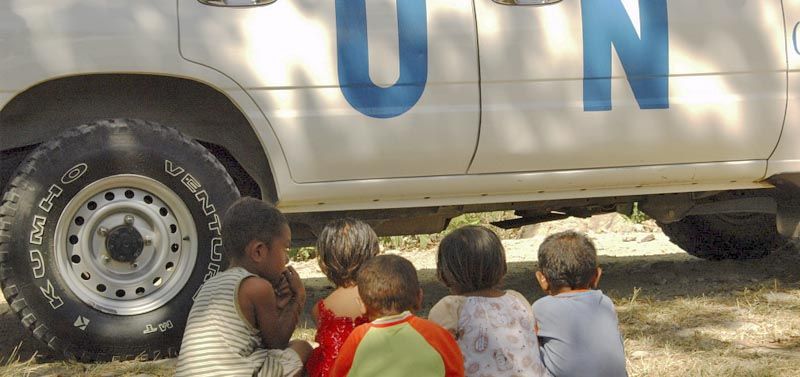
Working at the United Nations (UN) is a career goal for many people interested in diplomacy, human rights, international cooperation, or peacebuilding.
Every year, students and professionals ask us how to work at the UN and what kind of training is required to build a career within the United Nations system or other international organizations. This article summarizes the key information.
The UN is one of the largest international organizations in the world, with 15 autonomous specialized agencies (such as WHO, UNESCO, FAO, and IMF) and multiple funds and programmes (including UNICEF, UNDP, UNHCR, and WFP) working in more than 190 countries. In total, the UN system includes over 30 entities across diverse professional fields.
This diversity means there are many different career paths within the UN system. Some of the main areas of work include:
Human Rights: Professionals who monitor human rights situations, prepare reports, or participate in international missions.
International Cooperation and Development: Specialists designing and implementing programmes in education, health, gender equality, or sustainability.
Peacebuilding and Conflict Resolution: Experts in mediation, conflict prevention, and peace processes.
International Communication: Teams responsible for public information campaigns, institutional communication, and media relations.
Project Management and Administration: Professionals handling programme management, logistics, finance, and human resources.
1. What Degree or Education is Needed to Work at the UN?
There is no single degree required to work at the UN, as the organization seeks multidisciplinary profiles. Common degrees among international organization professionals include:
International Relations
Law
Political Science
Economics or Business Administration
Communication
Sociology
Psychology
Development Studies
Engineerin
Beyond academic qualifications, specialized training and international experience are critical for entering international organizations and UN missions.
Training for International Missions: The REACT Course
The REACT programme originated from an initiative of the Organization for Security and Co-operation in Europe (OSCE) in 1999 during the Istanbul Summit, which created civilian teams trained for rapid deployment in conflict prevention, crisis management, and post-conflict rehabilitation.
Since 2003, IUCPM has run the REACT course to train professionals with the skills needed to participate in missions led by the UN, OSCE, EU, and international NGOs.
This five-week intensive programme offers:
Practical training: over 220 hours of in-person classes simulating real UN and international mission scenarios.
Field-relevant skills: monitoring human rights, analyzing conflicts, coordinating civil-military operations, and understanding humanitarian law.
Experienced faculty: instructors with professional backgrounds in international organizations, field missions, and humanitarian agencies, including individuals who work/have worked for the UN both in missions and agency offices.
Participants of the 30 editions of REACT have gone on to careers in international organizations, humanitarian agencies, public administrations, and civil society.
Why REACT Prepares You for International Careers
Practical approach: training applied to real-world scenarios in international missions and multilateral organizations.
International professional network: connect with students and professionals from multiple countries.
Understanding the international system: gain insight into UN operations and key multilateral programmes.
Learn more about the REACT course, and explore how it can prepare you for a career in international organizations.
2. Skills Needed to Work at the UN
In addition to academic credentials, UN recruiters value the following competencies:
Analytical capacity: understand complex political, social, and humanitarian contexts.
Intercultural communication: work effectively in diverse international teams.
Teamwork: collaborate in multidisciplinary, multinational teams.
Negotiation and conflict resolution: crucial in diplomatic processes and international missions.
Adaptability: operate effectively in diverse countries and changing environments.
3. Languages Needed to Work at the UN
English: primary language for most UN roles.
French: highly valued, especially in diplomacy and international missions.
Other official UN languages: Arabic, Chinese, Russian, Spanish.
Speaking multiple languages significantly enhances career opportunities in international organizations.
Frequently Asked Questions about Working at the UN
Q: Can you work at the UN without a master’s degree?
Some UN positions require a master’s, especially in fields like international relations, law, or development studies. Entry-level programmes and internships may accept candidates with a bachelor’s degree plus relevant experience. Specialized training and international exposure strengthen your profile.
Q: What degree is best for working at the UN?
There is no single degree. UN careers welcome professionals from international relations, law, political science, economics, communication, social sciences, and engineering, especially when combined with experience or training in international cooperation, human rights, or peacebuilding.
Q: Do you need international experience to work at the UN?
Yes, it is highly valued. Experience with NGOs, international organizations, humanitarian missions, or international projects helps professionals understand global operations. Programs like REACT provide hands-on training for these environments.
Q: How can I start a career in international organizations?
Start with internships, volunteer programmes, or specialized training in international cooperation, human rights, or peace missions. The REACT course equips students with practical knowledge and networks for careers in multilateral organizations.
Start Your International Career
If you want to pursue a career in human rights, international cooperation, diplomacy, or international missions, specialized training on how organizations operate internationally is key.
The REACT course by IUCPM provides practical skills, field knowledge, and professional networks that help participants prepare for careers in UN missions, multilateral institutions, and humanitarian programmes.
For more information about the next edition, selection process, and programme content, write to:
The Environmental Education Center (CEA) Carabineros de l’Alfàs del Pi will host from May 27 to June 22 the twenty-eighth edition of REACT, a five-week training program on peace processes and conflict prevention, organized by the association Helsinki Spain.
he mayor of l’Alfàs del Pi, Vicente Arques, has received at City Hall the president of Helsinki Spain, María Jaén Barandiarán, to learn the details of this training program for the fourth consecutive year will be held in l’Alfàs del Pi. A meeting which was also attended by the councilors of Cooperation and Volunteering, Isabel Muñoz, and International Residents, Martine Mertens, and the mayor of Culture, Manuel Casado.
This program trains professionals from different fields interested in improving their knowledge in conflict prevention, crisis and post-conflict management, rehabilitation and development, as well as their practical skills for field work in international peace operations.
The program uses a variety of methodologies, including presentations and lectures, discussions, group work, practical and advanced role-playing sessions, outdoor activities and simulation exercises.
The course content has been expanded to include all aspects related to conflict prevention and peacekeeping in the different contexts in which peace operations take place.
Created in 1992, Helsinki Spain is a leading organization in the field of peace education, human rights and development, both nationally and internationally, thanks to the quality and diversification of its educational and training programs capable of adapting to a dynamic society in continuous change.
This May 29th began in the facilities of the Environmental Education Center (CEA) Carabineros de l’Alfàs del Pi the REACT course, which is an international training program on peace process and conflict prevention, with the participation of 38 people from 22 different countries.
This program is organized by Helsinki España, which is an association that aims to train professionals from different fields interested in improving their knowledge in conflict prevention, crisis and post-conflict management, rehabilitation and development, as well as their practical skills for field work in international peace operations.
The inauguration of the course was attended by the acting councilors of Residents, Martine Mertens, and Cooperation and Volunteering, Isabel Muñoz, and the acting mayor of Tourism, Luis Miguel Morant, who visited the CEA Carabineros to welcome the various participants of the REACT course. An informal meeting in which they have been accompanied by the president of Helsinki Spain, María Jaén Barandiaran, and the general secretary of the organization, Ángela Suárez Jaimes.
The REACT course was created in 2003 with the objective of preparing professionals with diverse career paths interested in joining the Rapid Expert Assistance and Co-operation Teams (REACT) of the Organization for Security and Co-operation in Europe (OSCE). To date, the course has trained more than 500 people.
The course uses a variety of methodologies, such as presentations and lectures, discussions, group work, practical and advanced role-playing sessions, outdoor activities and simulation exercises. Over time REACT has been renewed to include all aspects related to conflict prevention and peacekeeping in the different contexts in which peace operations take place.
The training program is divided into five modules: ‘Conflict Analysis’, ‘Protection of Civilians’, ‘Challenges in Peacekeeping’, ‘Human Security and Complex Crimes’ and ‘HEAT’, the latter including simulations to learn how to deal with associated risks and other critical or emergency situations during mission deployment. As in the two previous editions, four of the five modules are taught in l’Alfàs del Pi.
Since 1992, Helsinki España has been a leading organization in the field of education for peace, human rights and development, both nationally and internationally, thanks to the quality and diversification of its educational and training programs capable of adapting to a dynamic society in continuous change.