

The Spanish Ministry of Defence and Helsinki España reinforce their partnership to enhance the safety of professionals working in conflict zones and humanitarian emergencies.
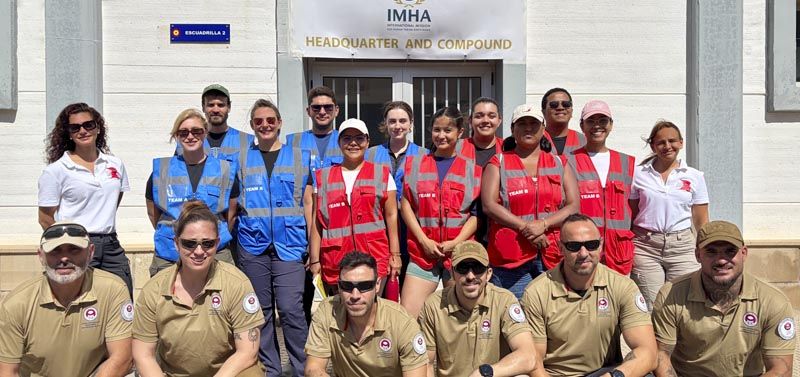
From 22 to 26 June, the Los Alcázares Air Force Base (Murcia, Spain) hosted a new edition of the Hostile Environment Awareness Training (HEAT) course, an intensive five-day programme delivered by the International University Centre for Peace Missions (IUCPM) of Helsinki España, in cooperation with the Spanish Ministry of Defence, under the framework of the collaboration agreement officially published in the Spanish Official State Gazette (BOE).
The HEAT course prepares humanitarian professionals working in armed conflicts, humanitarian crises and disaster response operations, equipping them with the knowledge, practical skills and decision-making capabilities required to operate safely and effectively in high-risk environments.
This edition brought together 12 humanitarian workers, NGO staff and human rights defenders from seven different nationalities, who are currently deployed in countries such as Ethiopia, Mexico and Colombia, among other complex operational contexts.
Civil-Military Cooperation as a Key Component of Humanitarian Preparedness
Conducting the training within an active military installation provides an exceptional level of realism that significantly enhances the learning experience. The military environment enables participants to train under conditions that closely resemble those they may encounter during international humanitarian deployments.
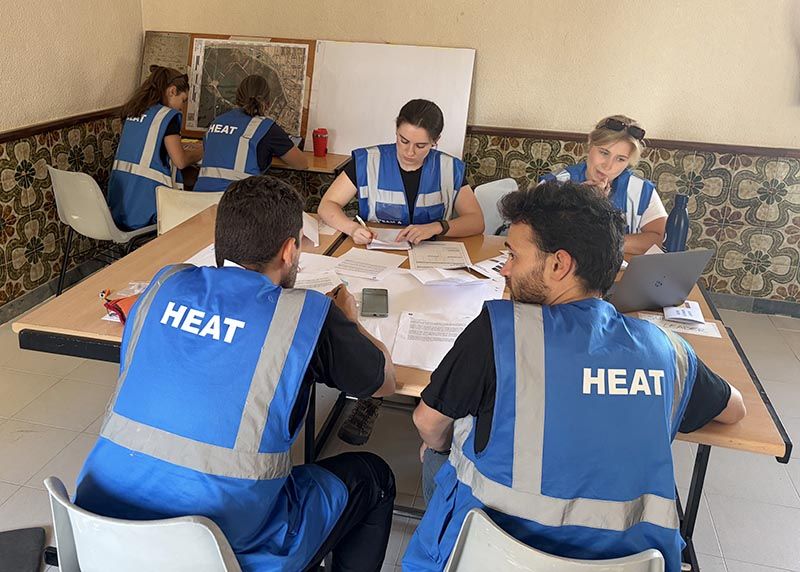
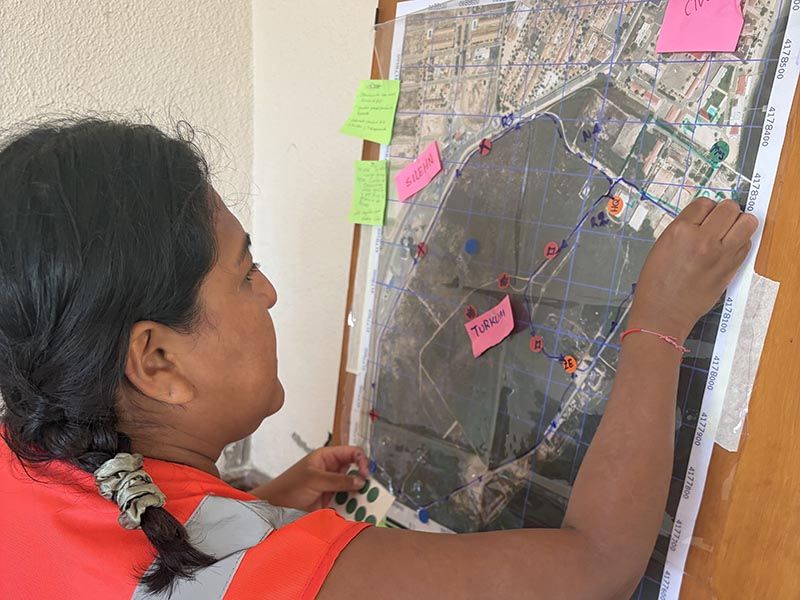
To maximise realism, the course revolves around a simulated humanitarian mission (IMHA). Throughout the five-day exercise, participants are assigned operational roles, including Team Leader, Communications Officer, Logistics Officer and Supply Officer, and work together to plan and execute a complete humanitarian deployment.
The simulation includes mission planning, humanitarian aid delivery, negotiations with local actors, civil-military coordination, security incident management and decision-making under pressure. This immersive methodology allows participants to experience the operational challenges of humanitarian field missions while strengthening teamwork, leadership and coordination skills.
The course also offers a unique opportunity for civilian professionals to work alongside military personnel, reflecting the reality of many international operations where humanitarian organisations and armed forces cooperate to protect civilians, facilitate humanitarian assistance and contribute to stability in crisis-affected areas. This practical approach highlights the importance of civil-military cooperation as an essential element of effective humanitarian action.
A Shared Commitment to Security, Training and Human Rights
This training is made possible through the cooperation agreement between the Spanish Ministry of Defence and Helsinki España, which promotes joint initiatives aimed at fostering a culture of security and defence, as well as specialised training programmes in international cooperation and crisis management.
Within this framework, the Ministry of Defence provides access to the facilities of Los Alcázares Air Force Base for the delivery of the HEAT course, enabling participants to benefit from a highly realistic training environment that would be difficult to replicate elsewhere.
Helsinki España expresses its sincere gratitude to the Spanish Ministry of Defence for its continued commitment to strengthening the preparation of humanitarian professionals and supporting initiatives that contribute to the protection of human rights. This institutional partnership demonstrates how cooperation between public institutions and civil society can enhance the safety, effectiveness and resilience of those working on the front lines of humanitarian emergencies.
Through initiatives such as the HEAT course, Helsinki España and the Spanish Ministry of Defence reaffirm their shared commitment to promoting civil-military cooperation, improving the preparedness of humanitarian personnel and ultimately contributing to the protection of vulnerable populations worldwide.