At a moment marked by conflicts such as the war in Ukraine, the crisis in Lebanon, and the growing migratory pressures affecting Europe and, in particular, Spain, the so-called “new world order” occupies the center of the global agenda, as reflected in the recent Munich Security Conference. In this context, it is more necessary than ever to create spaces where young people can understand, analyze, and actively engage with the challenges that will shape the future.
Because a strong society is built not only by institutions, but also by an informed, critical, and committed citizenry.
Five cities, one conversation
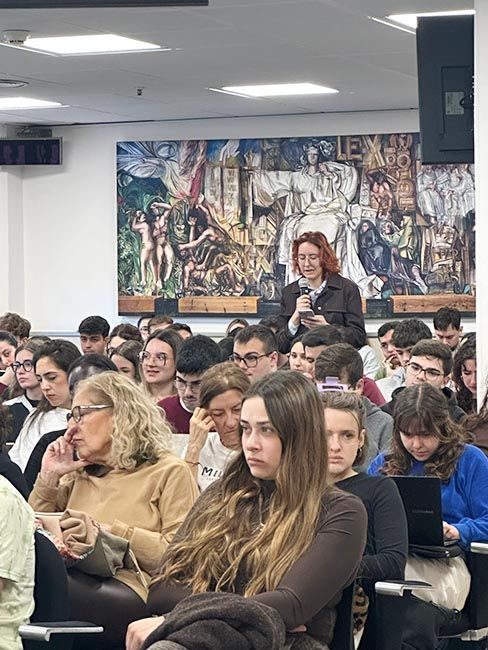
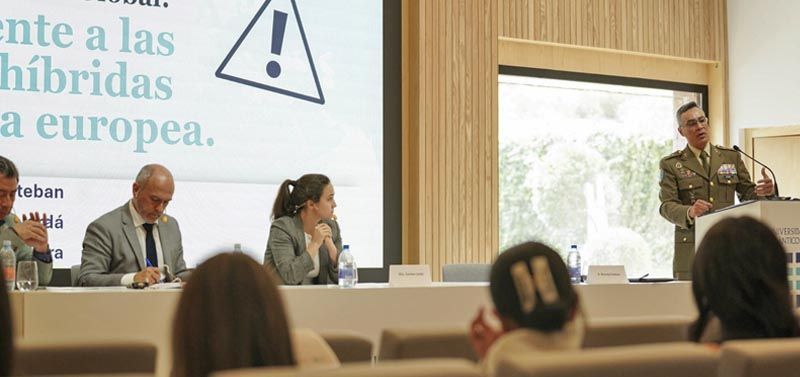
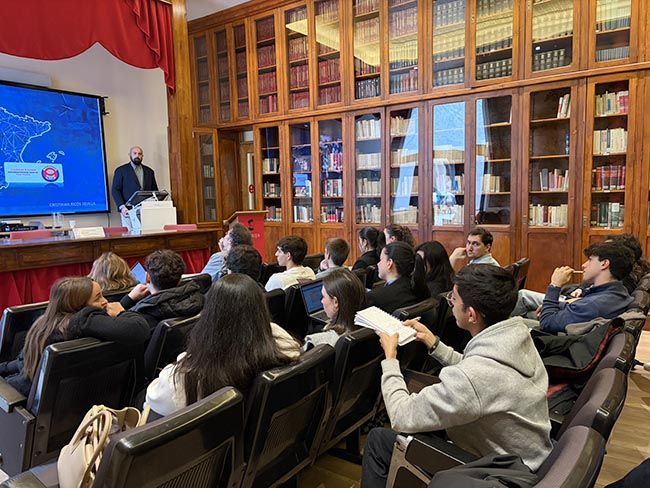
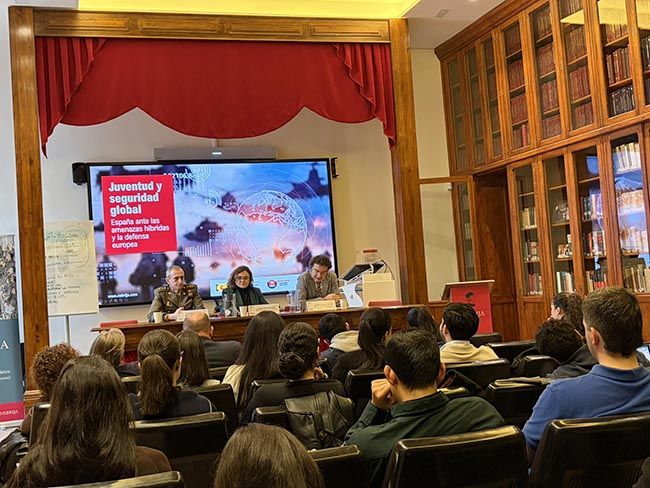
Between February and March 2026, Helsinki España organized the cycle of conferences “Youth and Global Security”, held at five universities across Spain:
- Universidad Nebrija (Madrid)
- Universidad de Valencia (Valencia)
- Universidad Autónoma de Barcelona (Barcelona)
- Universidad del Atlántico Medio (Las Palmas de Gran Canaria)
- Universidad de Deusto (Bilbao)
Approximately 250 students participated in these sessions, engaging with high-level speakers including Colonel José Luis Calvo Albero in Madrid and Major General Ricardo Esteban in the Canary Islands.
Key topics for understanding security today
The cycle covered the main challenges shaping the current global security landscape:
- Threats to the security of Spain and Europe
- Cognitive warfare and hybrid conflicts
- The evolution of terrorism in the international context
- Cybersecurity as a strategic pillar
- Modernization of the Armed Forces
- Recent transformations of NATO
- The role of major powers such as United States, China, and Russia
- The role of the European Union in collective defense
Emerging issues were also explored, such as the impact of new technologies on conflicts, artificial intelligence applied to security, radicalization and the prevention of violent extremism, and the psychology of terror.
Youth: a driving force in global security
A central message of the cycle was the decisive role of youth in building resilient societies. Faced with manipulation, disinformation, or radicalization, young people are not only recipients of risks, they are key agents in generating solutions.
The conferences appealed directly to their civic engagement and responsibility as active citizens, particularly in defending democratic values and combating extremism.
Global security is not only a matter of states—it is also a generational conversation.
Looking towards Europe
As part of the program, five participants have been selected to travel soon to Brussels, where they will visit European institutions and Spain’s Permanent Representation to the EU, reinforcing the practical and experiential dimension of the project.
A commitment that keeps growing
Funded by the Secretariat of State for Foreign and Global Affairs of the Ministry of Foreign Affairs, European Union and Cooperation, this cycle reflects Helsinki España’s commitment to bringing major global challenges closer to society, especially to those who will play a decisive role in shaping the future.
For several years, Helsinki España has organized conferences and sessions on Security and Defense, aiming to involve youth in strategic and global debates. This commitment continues, and we will keep holding these initiatives to foster critical thinking, active participation, and civic responsibility among new generationss.
Because understanding the world is the first step to transforming it.