Oct 28, 2025 | Education, Employment guidance and social collaboration, Human Rights
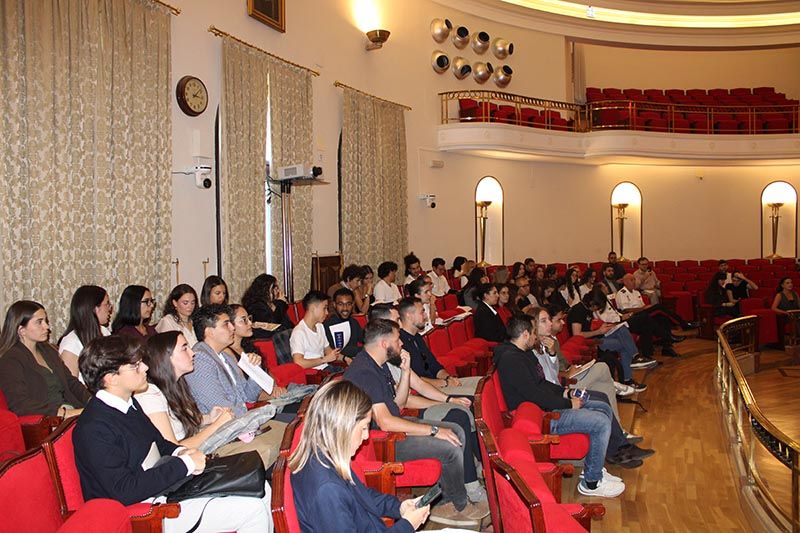
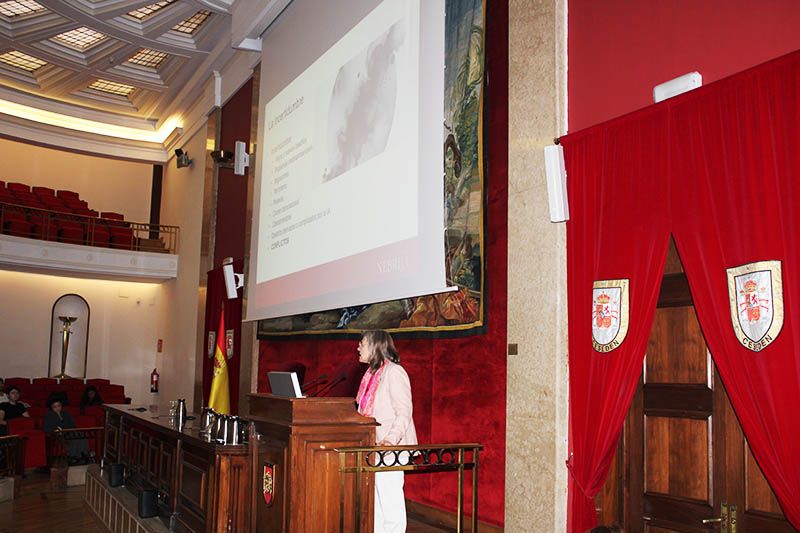
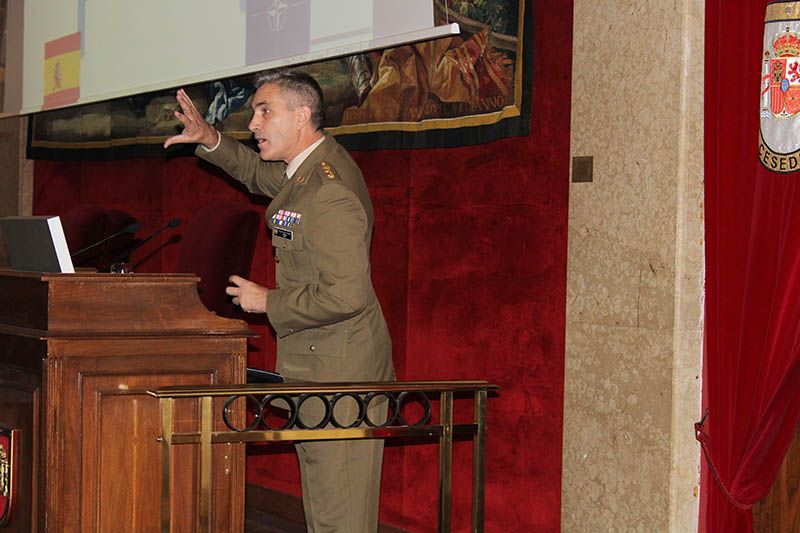
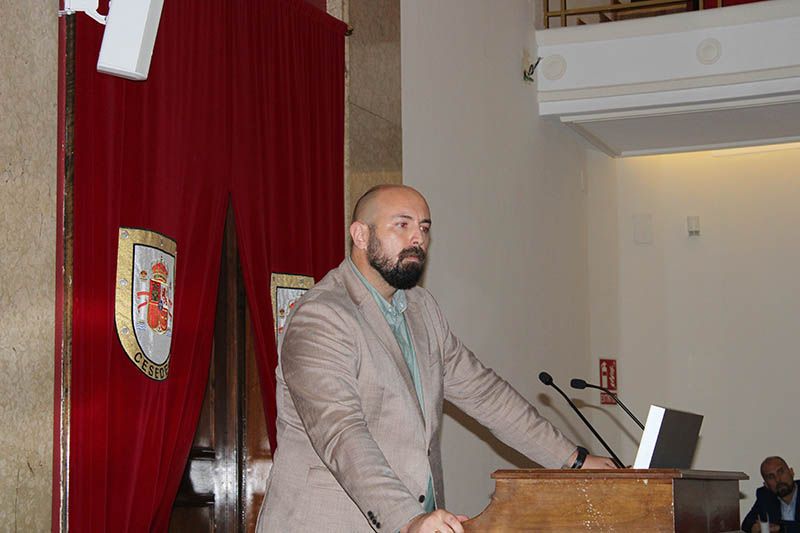
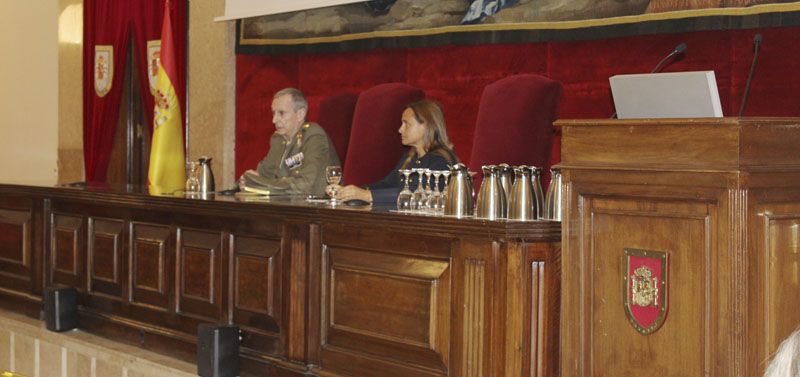
On 14 October, Helsinki España held the conference “Challenges and Threats to International Security 2025” at the Spanish Centre for National Defence Studies (CESEDEN), thanks to the support of the Spanish Ministry of Defence and in collaboration with CESEDEN. The event served as a space for analysis, dialogue, and reflection on the key challenges facing global and national security in an increasingly complex geopolitical context.
The conference brought together over one hundred participants, including academics, students, and professionals from the fields of security and defence. Its main objective was to engage society—particularly younger generations—in understanding and addressing contemporary security challenges, including disinformation and ethical leadership in times of uncertainty.
These annual conferences, organised by Helsinki España, aim to foster critical thinking and multidisciplinary discussion around the global threats of the 21st century. In a world shaped by geopolitical crises, regional conflicts, cyber threats, and environmental challenges, promoting joint reflection among the academic, military, and civil sectors is essential to building a more informed, resilient, and human approach to international security.
Key Speakers and Presentations
The session opened with remarks from Colonel José Luis Calvo Albero (CESEDEN) and Ms. María Jaén (Helsinki España), who highlighted the human dimension of security and the importance of institutional cooperation to strengthen social resilience.
🔹 Dr. Gracia Abad Quintanal (Universidad Nebrija) provided an insightful overview of international tensions and conflicts, addressing lesser-known crises and the rise of hybrid warfare.
🔹 Colonel Juan C. Castilla (CESEDEN) presented the Spanish perspective on international conflicts, emphasising Spain’s role and responsibility as a member of NATO and the European Union.
🔹 Ms. Carmen Jordá Sanz (Universidad Camilo José Cela) discussed the impact of disinformation on democracies, stressing the need for a critical and ethical approach to information control and dissemination.
🔹 Lieutenant Colonel Fernando Rojas Caja (CESEDEN) explored the theme of leadership in times of uncertainty, underscoring the relevance of emotional intelligence, self-awareness, and interpersonal skills as essential tools for effective leadership in crisis situations.
🔹 Mr. Christian Ricós Sevilla, an expert on radicalisation and terrorism, examined terrorism and extremism, challenging the myth of a “terrorist personality” and analysing the religious symbolism and motivations underpinning radical movements.
🔹 Finally, Mr. José Antonio Álvarez Crespo and Mr. Ricardo González Ruiz, directors of the project Consenso Victoria, underlined the importance of coordination among security forces and the need for public training to respond effectively to emergencies. The event concluded with the screening of the documentary “Consenso Victoria”, which showcased best practices in the management of critical incidents.
Helsinki España extends its sincere appreciation to the Ministry of Defence for its financial support and to CESEDEN for its collaboration and hospitality. Their commitment made this event possible and reinforced our shared mission to promote education, cooperation, and the development of a more secure, informed, and resilient society.
Oct 14, 2025 | Education
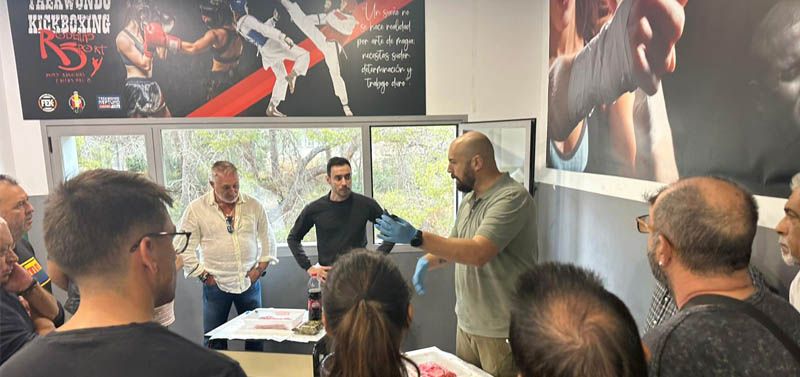
The City Council of Alfaz del Pi hosted today, Monday 13 October, from 8:00 a.m. to 12:00 p.m., a training session for members of the Local Police and Civil Protection, organized by Helsinki España within the framework of the MEDIAPROP 2025 programme, promoted by the Regional Government of Valencia (Generalitat Valenciana).
Under the title “Mediation Tools for a Resilient Community”, the training aimed to provide security and emergency personnel with mediation and effective communication tools to strengthen social resilience and public trust in times of crisis such as emergencies, disasters, or violent incidents.
Throughout the session, participants engaged in participatory dynamics, simulation workshops, and role-playing exercises to learn how to manage rumours, prevent collective panic, and promote neighbourhood cooperation during moments of tension.
The main topics addressed included:
- Crisis management and effective communication in emergencies.
- Community mediation and peaceful conflict resolution.
- Post-crisis reconstruction: rebuilding trust and social cohesion.
This initiative is part of the MEDIAPROP 2025 programme of the Generalitat Valenciana, which seeks to promote a culture of mediation and peaceful coexistence across Valencian municipalities through training activities for both citizens and security and emergency professionals.
“Mediation is an essential tool to strengthen cooperation between institutions and citizens. Training local agents in these skills directly contributes to the safety and well-being of the community,” stated María Jaén, President of Helsinki España.
The course took place at the municipal facilities of the Alfaz del Pi City Council and featured Christian Ricos Sevilla as the main trainer, alongside professionals specialized in mediation and emotional management during crises.
This training reflects Helsinki España’s ongoing commitment to offering practical, hands-on learning experiences that go beyond an academic approach, fostering direct collaboration between civilians and security forces. Through this approach, the organization seeks to strengthen capacities in security, mediation, and peaceful coexistence, key pillars for building more resilient and cohesive communities.

Sep 12, 2025 | Education, Heat, Human Rights
Imagine you are traveling in another country and get lost, finding yourself on an unfamiliar street when suddenly someone threatens you with a weapon. Every second feels eternal, and you don’t know the best decision to protect yourself. Or consider being at your workplace when, unexpectedly, an intruder enters attempting to rob you at gunpoint. Everything happens in an instant, and the difference between escaping unharmed or getting injured depends on your preparation.
Now imagine it’s nighttime, and you are walking alone through a poorly lit neighborhood with almost deserted streets. Every sound alerts you, and any shadow seems like a potential threat. The sense of vulnerability is real, and knowing how to react in these circumstances can make the difference between controlling the situation or facing an outcome that may affect your physical and emotional well-being.
Beyond human actions, natural phenomena can strike without warning: a sudden earthquake shaking buildings and streets, creating chaos and confusion, or flash floods that sweep through neighborhoods and cut off escape routes, leaving people trapped and disoriented.
In all these situations, security cannot be improvised. Staying calm, applying emergency protocols, making quick decisions, and protecting both your life and those around you are skills learned through specialized training. Every second counts, and every action can make a difference.
HEAT and Security Courses: Preparation for Any Situation
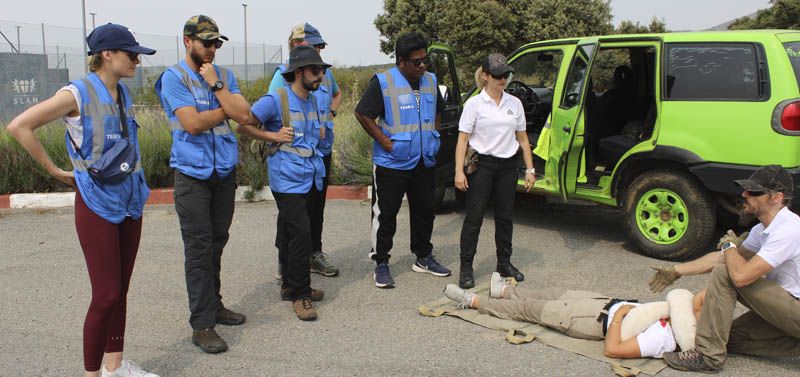
Helsinki España, through the International University Centre for Peace Missions (IUCPM), offers courses designed to prepare participants to act safely in their daily life, during travel, and in professional environments. Instructors combine civilian and military experience and have worked in crisis contexts, natural disasters, and hostile environments. This ensures that the training is practical, realistic, and applicable to any situation, providing participants with the tools they need to act safely and effectively.
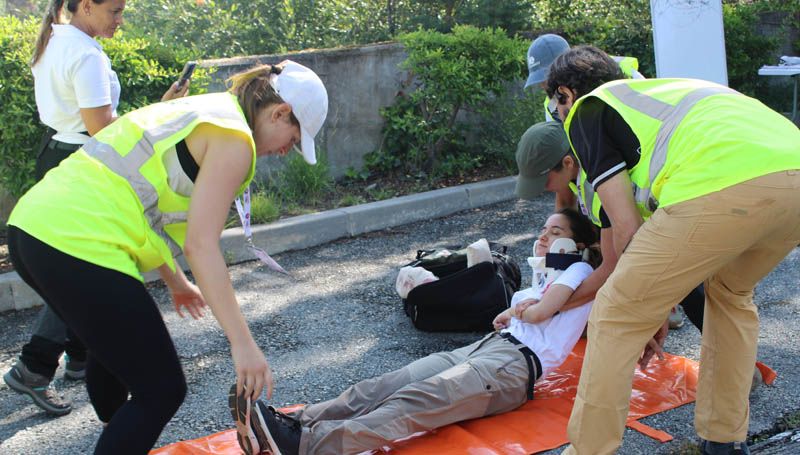
- HEAT Course (Hostile Environment Awareness Training): an intensive five-day training that prepares participants to act with safety, self-control, and responsibility in risk contexts. Includes ambush simulations, hostage scenarios, tactical first aid, and evasive driving. This course teaches how to make quick and safe decisions when it matters most and maintain calm under high-pressure conditions.
- Security and Self-Protection Course: a three-day practical training that teaches personal defense techniques, stress management, evacuation protocols, and emergency first aid. This course helps increase confidence and personal security.
Why YOU Should Train in Security Today
Training in security and HEAT is not just about acquiring techniques: it’s about preparing to protect your own life and that of others, and making the right decisions when it matters most. The benefits are concrete:
- Protection of life: knowing emergency protocols and first aid increases the chances of staying safe and helping others.
- Reduction of impact in risk contexts: trained participants know how to act quickly, avoiding unnecessary harm and material losses.
- Faster and more accurate decision-making: training allows evaluating risks in seconds and choosing the best course of action under pressure.
- Stress management in critical moments: learning to maintain calm and emotional control even in chaotic situations.
- Confidence and personal security: feeling prepared provides peace of mind and strengthens the ability to face difficult situations without fear.
Training in security and self-protection is an investment in the ability to react, protect yourself, and act effectively when it is most needed.
Training That Transforms
As Jiayue Qian, an international alumna, said: “The HEAT training was an immersive experience. I feel more prepared, both mentally and technically, and I apply every protocol learned in any emergency.”
These courses do more than teach techniques: they develop security awareness, automate responses, and strengthen confidence in emergency scenarios. Every second counts, and preparation can make the difference between maintaining control or facing serious consequences.
Don’t Wait for It to Happen
Every day without training is a lost opportunity to act effectively. Security and self-protection are not just skills: they are decisions that can save lives, protect operations, and ensure personal and professional stability. With Helsinki España’s HEAT training and security programs, participants learn from experts with real field experience, ensuring a practical, realistic, and applicable learning experience.
Training in security is not an expense: it is an investment in your life, your peace of mind and your future.

Oct 10, 2024 | Education
For the third consecutive year, Helsinki España, in collaboration with the Ministry of Defense and the Spanish Agency for International Development Cooperation (AECID), has organized the UN OCHA (United Nations Office for the Coordination of Humanitarian Affairs) civil-military cooperation course in the municipality of l’Alfàs del Pi. This course is designed to improve coordination between civilian and military actors during humanitarian emergencies, a crucial task to ensure an effective and unified response in crisis situations.
Over the span of a week, 22 professionals from the United Nations Office for the Coordination of Humanitarian Affairs (OCHA), the Spanish Ministry of Defense, and AECID participated in an intensive training program addressing the key challenges of coordination in humanitarian operations. The course covered essential topics such as communication management during emergencies, planning and executing on-the-ground interventions, and the critical role of maintaining neutrality and independence in humanitarian assistance.
Held in l’Alfàs del Pi, the course received support from local authorities. The closing ceremony was attended by councilwoman Isabel Muñoz and Rocío Guijarro, representing the l’Alfàs del Pi municipality, as well as María Jaén, President of Helsinki España, and Ángela Suárez, Secretary General of the association. They emphasized the importance of these trainings in ensuring that both civilian and military actors can work together effectively during crises, optimizing the delivery of aid and protecting those affected.
Helsinki España would like to extend its heartfelt thanks to the City Council of l’Alfàs del Pi for their continued support and collaboration in making this course possible. Each year, this training provides valuable tools to professionals dedicated to humanitarian aid, strengthening their capacity to intervene in emergency situations and improving the international humanitarian response.
Oct 10, 2024 | Education, Human Rights
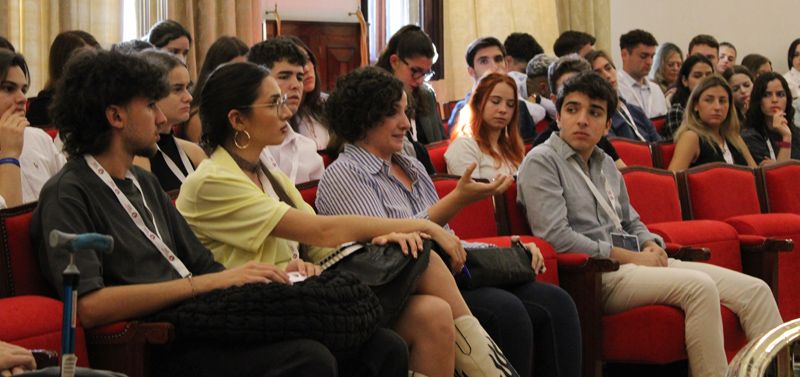
“Challenges and Threats to International Security: Building Critical Thinking from the University” is an event funded by the General Secretariat for Defense Policy of the Ministry of Defense. Its objective is to enhance knowledge about current challenges and threats to international security, encourage analysis and critical thinking, and engage young people in key issues in today’s international security. The sessions will be led by representatives from the Ministry of Defense, the Higher Center for National Defense Studies, the Spanish Institute for Strategic Studies, and security experts.
If you’re interested in delving into the major global threats that jeopardize peace and international security, understanding the impact of disinformation on contemporary democracies through the use of social media, and learning about the risks associated with new hybrid warfare strategies, you shouldn’t miss this activity.
With a duration of approximately 5 hours, there will be three sessions led by experts, followed by one university debate session. The project focuses on fostering critical thinking to enhance the analytical and argumentative abilities of the participants. To achieve this, at the end of the event, different groups will be formed among the attendees to discuss issues previously raised during the event.
The event will take place on Wednesday, October 23rd, from 08:30 AM to 02:00 PM at the University of Nebrija.
Register here or via email at iucpm2@helsinkiespana.org
Apr 19, 2024 | Education, Human Rights, REACT
The Environmental Education Center (CEA) Carabineros de l’Alfàs del Pi will host from May 27 to June 22 the twenty-eighth edition of REACT, a five-week training program on peace processes and conflict prevention, organized by the association Helsinki Spain.
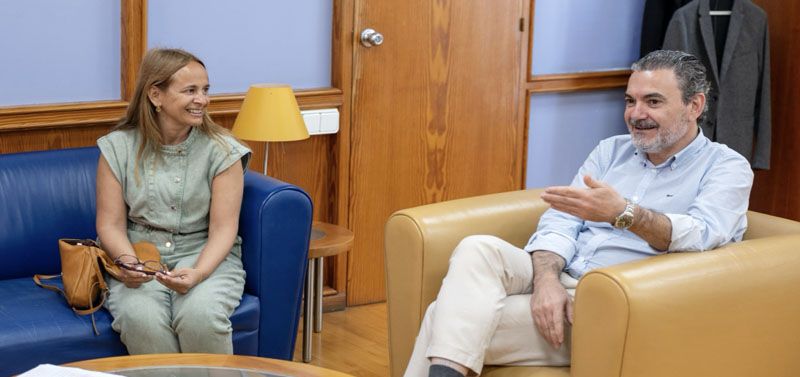
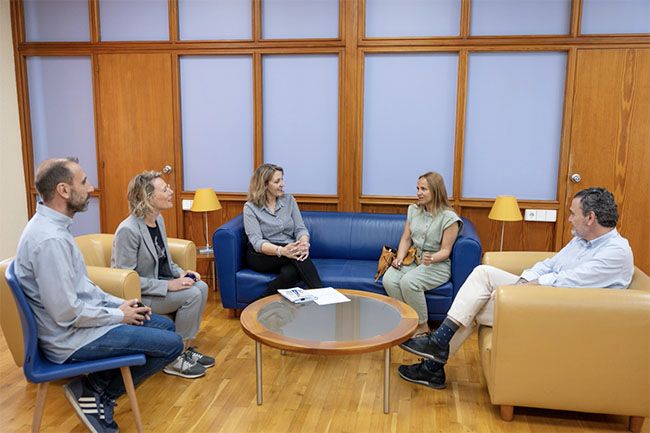
he mayor of l’Alfàs del Pi, Vicente Arques, has received at City Hall the president of Helsinki Spain, María Jaén Barandiarán, to learn the details of this training program for the fourth consecutive year will be held in l’Alfàs del Pi. A meeting which was also attended by the councilors of Cooperation and Volunteering, Isabel Muñoz, and International Residents, Martine Mertens, and the mayor of Culture, Manuel Casado.
This program trains professionals from different fields interested in improving their knowledge in conflict prevention, crisis and post-conflict management, rehabilitation and development, as well as their practical skills for field work in international peace operations.
The program uses a variety of methodologies, including presentations and lectures, discussions, group work, practical and advanced role-playing sessions, outdoor activities and simulation exercises.
REACT was created in 2003 with the objective of preparing professionals with diverse professional backgrounds interested in joining the Rapid Expert Assistance and Co-operation Teams (REACT) of the Organization for Security and Co-operation in Europe (OSCE). During this time, more than 500 people have been trained.
The course content has been expanded to include all aspects related to conflict prevention and peacekeeping in the different contexts in which peace operations take place.
The program is divided into five modules: ‘Conflict Analysis’, ‘Protection of Civilians’, ‘Challenges in Peacekeeping’, ‘Human Security and Complex Crimes’ and ‘HEAT’, which includes simulations to learn how to deal with associated risks and other critical or emergency situations during mission deployment. As in the three previous editions, the first four modules will be held in l’Alfàs del Pi.
Created in 1992, Helsinki Spain is a leading organization in the field of peace education, human rights and development, both nationally and internationally, thanks to the quality and diversification of its educational and training programs capable of adapting to a dynamic society in continuous change.